Why do earthquakes rattle first and then sway?

 The answer is the difference in speed between 2 kinds of waves.
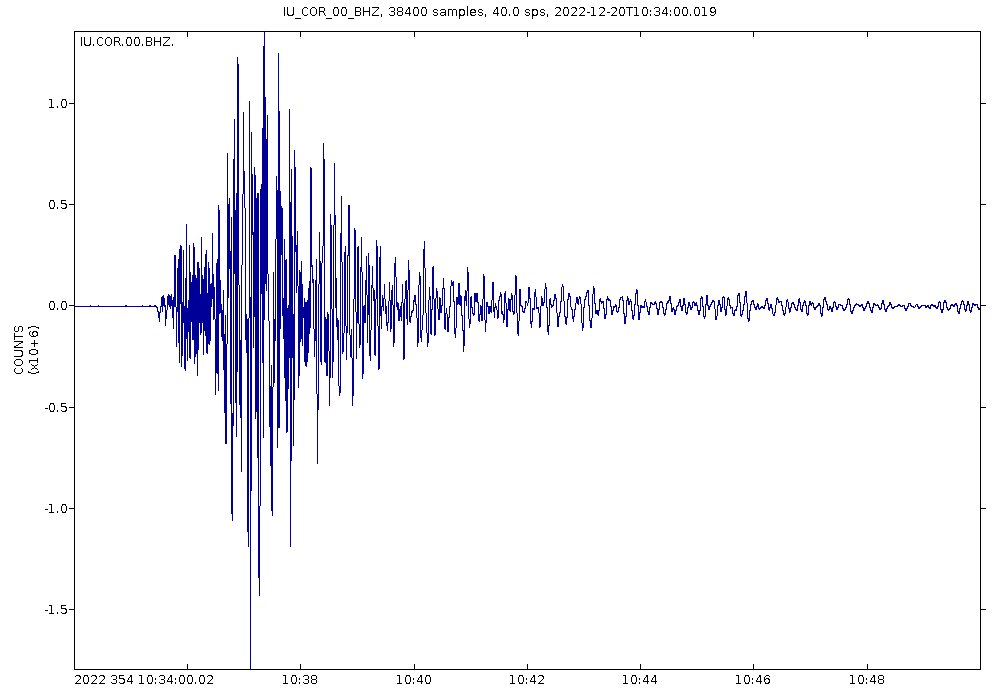
Earthquake shaking arrives as 2 kinds of waves: the fast P wave and the slower S wave. The P wave arrives first and causes small, quick rattling. The S wave comes later and causes big, rolling swaying. Japan's Earthquake Early Warning system uses this difference in arrival times to send alerts before the strong shaking arrives.
Shaking travels as waves
When an earthquake happens, rock underground slips, and that movement spreads outward as waves (seismic waves). According to the Japan Meteorological Agency (JMA), there are mainly 2 kinds of seismic waves: the fast "P wave" and the "S wave," which is slower but shakes harder.
The fast P wave and the strong S wave
JMA explains that the P wave travels at about 7 kilometers per second and the S wave at about 4 kilometers per second. In its guides, JMA calls the P wave that arrives first the "rattling wave (preliminary tremor)" and the S wave that arrives later the "swaying wave (main shaking)," and says earthquake damage is mainly caused by the S wave. However, the speed changes depending on the layers of ground the waves pass through, and one source (the National Research Institute for Earth Science and Disaster Resilience) says that near the surface, P waves travel at around 5 kilometers per second and S waves at around 3 kilometers per second.
The wave shapes are illustrations. The speeds are from JMA's explanation.
Longitudinal and transverse waves
According to that institute, the P wave is a "longitudinal wave," in which the ground shakes in the same direction the wave travels, and the S wave is a "transverse wave," in which the ground shakes at a right angle to the direction the wave travels. These names are not about "up and down" versus "side to side"; they describe the shaking compared with the direction the wave travels. The letters come from the English words Primary (first) and Secondary (second).

The time gap helps early warnings
The farther you are from the source of the earthquake, the bigger the gap between the arrival of the P wave and the S wave. Japan's Earthquake Early Warning system catches the P wave with seismometers near the source, quickly calculates the location and size of the earthquake and how strong the shaking will be, and sends an alert before the S wave arrives. However, because calculating and sending the alert takes a few seconds, it may not arrive in time for strong shaking very close to the source.
Want to know more?
- If you multiply the number of seconds between the arrival of the P wave and the S wave by 7–8, you get the rough distance to the source in kilometers. This number is called the "Omori constant," after a seismologist's name.
- Japan's Earthquake Early Warning system uses about 690 JMA seismometers and seismic intensity meters, plus a network of about 1000 observation sites across Japan run by the National Research Institute for Earth Science and Disaster Resilience.
- S waves (transverse waves) cannot travel through liquids such as water. P waves, which are longitudinal, can travel through liquids too.
Quick quiz: test yourself
Which wave brings the big shaking that comes later?
Show the answer
- The S wave
- The P wave
- An aftershock wave
The S wave The fast P wave arrives first with small rattling, and the slower S wave brings the big, swaying shake.
The fast P wave arrives first with small rattling, and the slower S wave brings the big, swaying shake.
Next quiz ›Sources
- 緊急地震速報のしくみ気象庁 (in Japanese)
- 緊急地震速報の原理 どう使う(気象庁リーフレット)内閣府 防災情報のページ(気象庁作成) (in Japanese)
- 3.1 震源決定防災科学技術研究所 Hi-net (in Japanese)
- 地震波速度地震調査研究推進本部(地震本部) (in Japanese)
This article was written after checking the sources above as of 2026-10-03. Explanations may change as research progresses. Photo credits are shown below each photo.