Why does ice float on water?

 The answer lies in how water molecules line up.
Ice floats on water because, for the same volume, ice is lighter than water. When water freezes, its molecules line up in a regular pattern, as if holding hands, forming a shape with lots of gaps. So when water freezes, its volume grows by about 9%, it becomes lighter than water, and it floats. For most substances the solid is heavier, so water has an unusual property.
Usually the solid is heavier
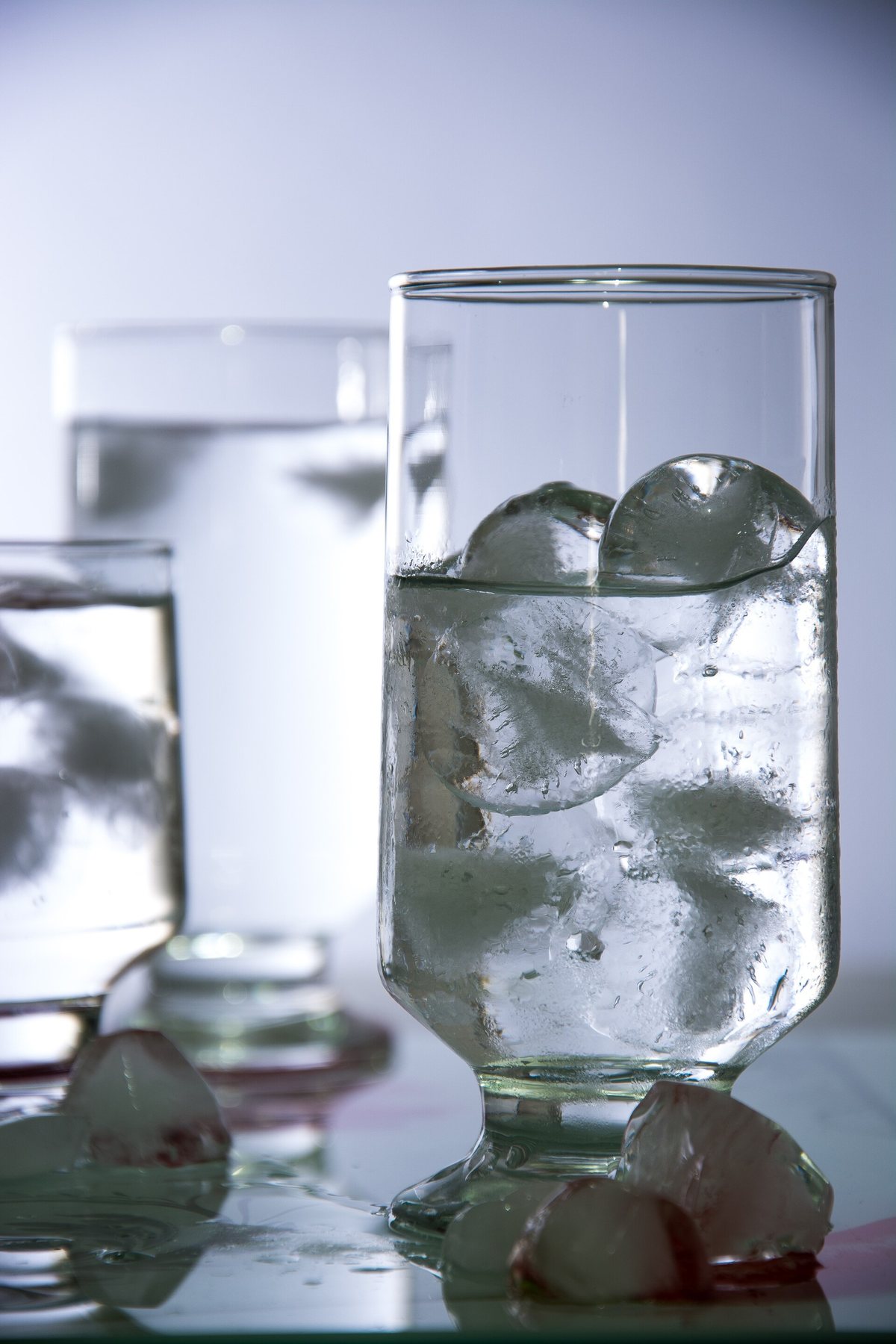
For most substances, when a liquid turns solid, the molecules pack tightly together and the weight for the same volume (density) goes up. Water does the opposite. According to the U.S. Geological Survey (USGS), water becomes about 9% less dense when it freezes. That is why both the ice in your glass and icebergs at sea float instead of sinking.
Lined up with lots of gaps
Water molecules pull on the molecules next to them through weak links called "hydrogen bonds." When water becomes ice, these links line the molecules up neatly in a hexagonal network and lock them into a shape with lots of gaps. In liquid water, the molecules move around and can slip into the gaps, so the same amount takes up less volume.
The number and shape of the molecules are simplified to make it easier to understand.

Most of an iceberg is underwater
According to the USGS, the density of ice is about 90% of that of water. So only about 10% of a floating piece of ice sticks out above the surface, and most of it stays under the water. However, if there are air bubbles in the ice, this ratio changes a little.
How ice protects lake life
Water is heaviest at about 4℃. When a lake cools in winter, heavy water at around 4℃ collects at the bottom, while the colder, lighter water and ice gather at the top. The ice that forms on the surface works like a lid, making it harder for the water below to freeze. If ice sank, lakes might freeze from the bottom up.
Want to know more?
- Water expands with great force when it freezes. When water that has seeped into cracks in a rock freezes, it can split the rock.
- Water that soaks into roads and then freezes and expands is one of the reasons cracks and potholes increase after a cold winter.
- Ice made from a special kind of water called "heavy water" is heavier than ordinary water, so it sinks when you put it in ordinary water.

Quick quiz: test yourself
Why does ice float on water?
Show the answer
- It has air trapped inside
- It is lighter than water for its size
- The water's surface holds it up
It is lighter than water for its size When water freezes, its molecules line up with lots of gaps, so its volume grows by about 9%. For the same volume, ice is lighter than water, so it floats.
When water freezes, its molecules line up with lots of gaps, so its volume grows by about 9%. For the same volume, ice is lighter than water, so it floats.
Next quiz ›Sources
- Water DensityU.S. Geological Survey (USGS) Water Science School
- 8.12: Ice and WaterChemistry LibreTexts (ChemPRIME, Chemical Education Digital Library)
This article was written after checking the sources above as of 2026-10-03. Explanations may change as research progresses. Photo credits are shown below each photo.