How can hummingbirds stay still in midair?

 The secret lies in the way it moves its wings.
Hummingbirds can stay still in midair because they move their wings very fast in a twisting figure-8 pattern, making force to hold up their bodies not only when they push their wings down but also when they lift them up. Ordinary birds make force mainly on the downstroke, so they cannot stay in one spot in the air for long.
The only backboned animal that can hover long
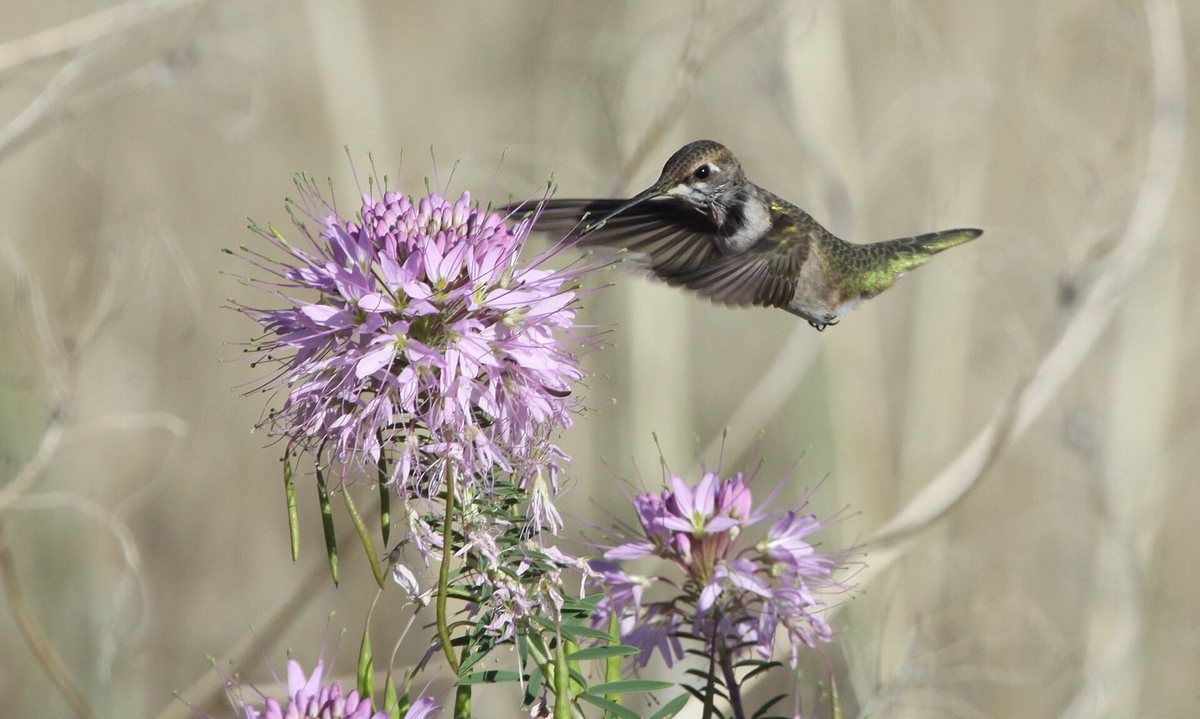
According to the Smithsonian's National Zoo, hummingbirds are the only animals with backbones that can keep "hovering," staying in one spot in the air for a long time. They can also fly backward and even upside down. This ability is what lets them sip nectar while staying still in front of a flower.
Wings that trace a figure 8
San Diego Zoo explains that a hovering hummingbird's wings flip over as they trace a figure 8. Hummingbirds have strong muscles not only for pushing their wings down but also for pulling them up. Another special feature is that most of the wing is made of bones that match our hand, not the arm bones that make up much of other birds' wings.
Force on the upstroke too
A study published in the science journal Nature in 2005 looked at the airflow around hovering hummingbirds and found that they make 75% of the force that holds them up on the downstroke and 25% on the upstroke. Until then, it had been thought to be half and half, so the study showed that while hummingbirds fly somewhat like insects, they still keep bird-like features.
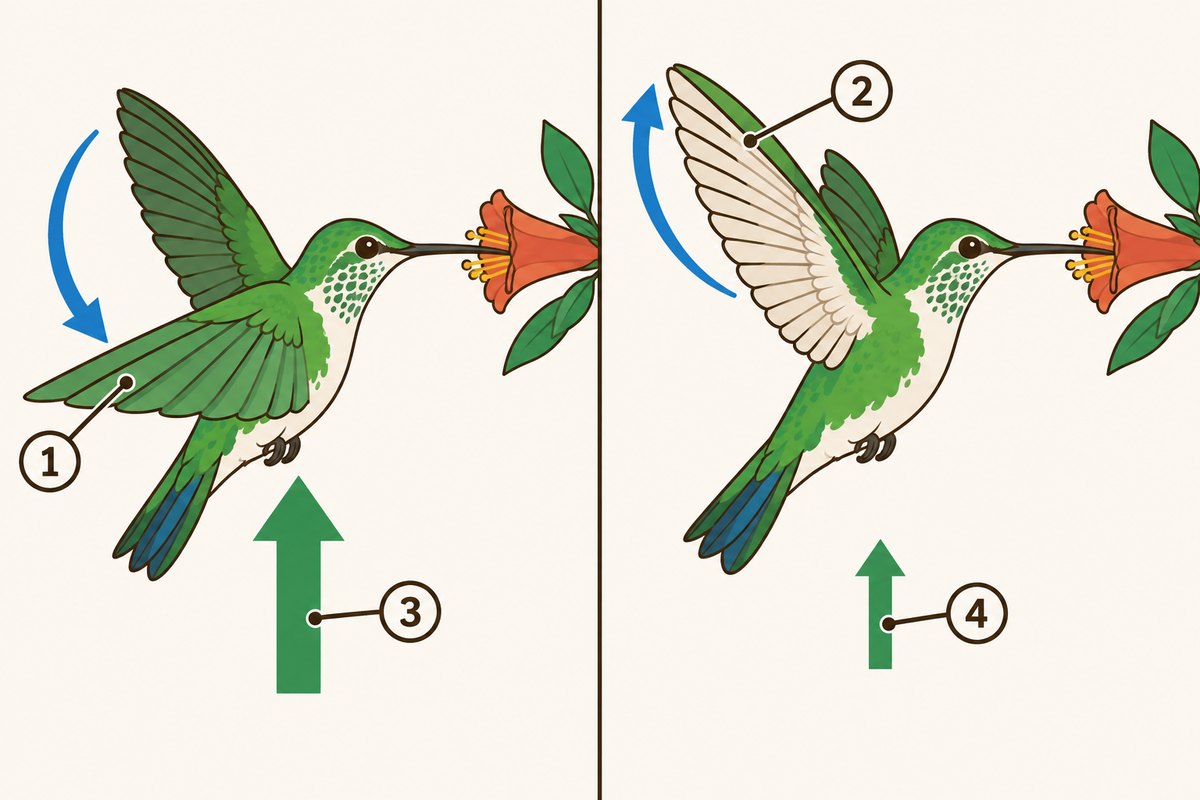
- 1Downstroke
- 2Upstroke with the wing flipped over
- 3Bigger upward force from the downstroke
- 4Smaller upward force from the upstroke

Super-fast wingbeats and heartbeats
How fast they flap depends on the species, from about 20 to 200 times per second. The ruby-throated hummingbird flaps about 70 times per second in normal flight, and its heart beats 225 times a minute at rest and more than 1,200 times a minute while flying. Staying still in midair takes that much energy.
Want to know more?
- On cold nights or when food is scarce, hummingbirds sometimes enter a state close to "torpor," lowering their body temperature and keeping their body functions to a minimum.
- The smallest is the bee hummingbird, which lives in Cuba and weighs only about 1.95 grams.
- Hummingbirds live only in North and South America and nearby islands. There are no wild hummingbirds in Europe or Asia.

Quick quiz: test yourself
How can a hummingbird stay still in midair?
Show the answer
- Its upstroke also makes lift
- Its body is lighter than air
- Its tail holds it up
Its upstroke also makes lift It moves its wings fast while twisting them, so it makes force to hold up its body not only on the downstroke but also on the upstroke.
It moves its wings fast while twisting them, so it makes force to hold up its body not only on the downstroke but also on the upstroke.
Next quiz ›Sources
- HummingbirdsSmithsonian's National Zoo and Conservation Biology Institute
- HummingbirdSan Diego Zoo Wildlife Alliance
- Aerodynamics of the hovering hummingbirdNature
This article was written after checking the sources above as of 2026-10-03. Explanations may change as research progresses. Photo credits are shown below each photo.