Why are flamingos pink?

 Actually, the source of the color is in what it eats every day.
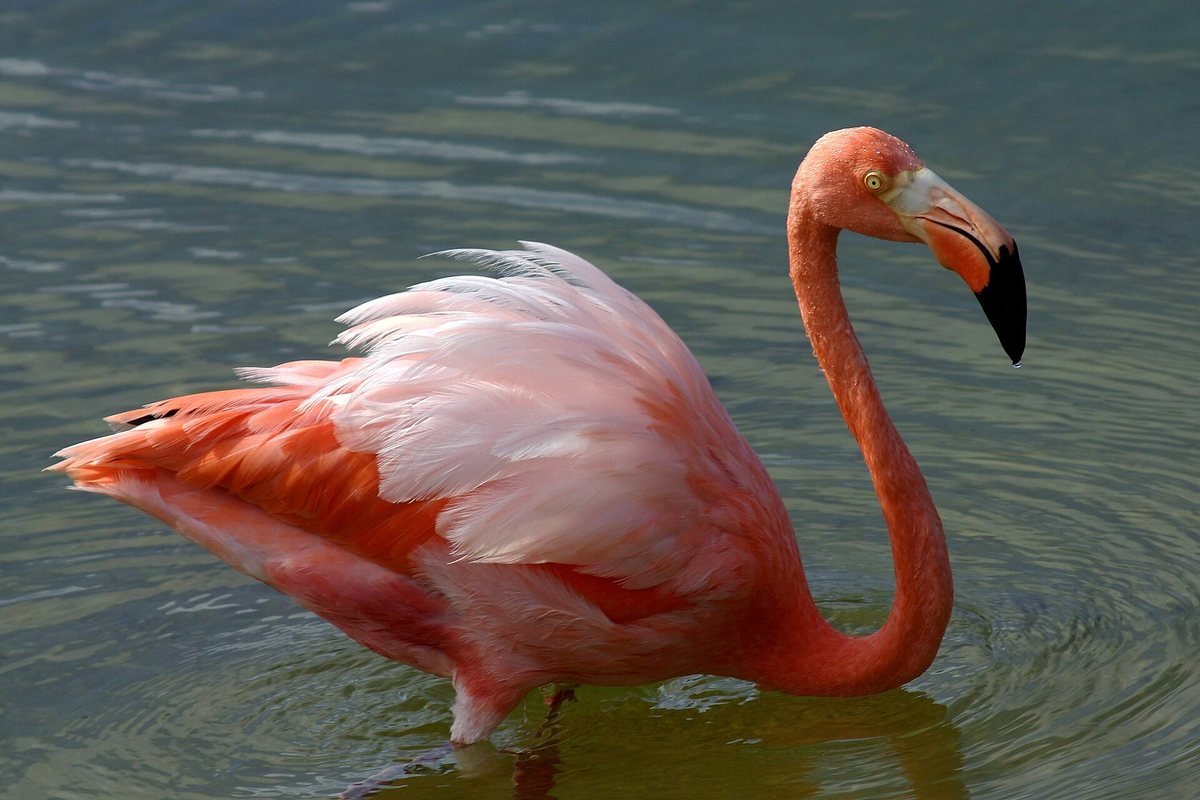
A flamingo's pink color comes from pigments it takes in from its food. The algae and tiny shrimp it eats contain pigments called "carotenoids," from the same family as the color of carrots, and these color its feathers, legs, and beak. Newly hatched chicks are not pink. They gain their color slowly over several years.
The color comes from pigments in food
A flamingo's feather color is not something its body makes on its own from birth. It comes from food. Flamingos eat algae and crustaceans (small animals with hard shells) such as tiny shrimp by filtering water through their beaks, and these foods contain lots of pigments called carotenoids. Carotenoids are from the same family of pigments as the orange color of carrots. We also get them from carrots and other foods, but not nearly enough to turn our bodies orange.
Food and color differ by species
There are 6 kinds of flamingos, and their food differs a little from kind to kind. Smaller species such as the Andean flamingo and the lesser flamingo are good at filtering out very tiny algae. Larger species such as the greater flamingo and the Chilean flamingo eat tiny shrimp, shellfish, and other small animals from the mud at the bottom of shallow water. Among them, the American flamingo, which lives around the Caribbean Sea and nearby areas, has the brightest color, with red, pink, and orange showing on its legs, beak, and face too.
Chicks are not pink
Newly hatched chicks are covered in fluffy gray or white down and are not pink. As they eat over several years and their feathers are replaced again and again, they slowly turn pink. Also, while parents raise their chicks on a nutritious liquid called "crop milk" that they bring up from deep in their throats, their color can fade, leaving their feathers pale pink or whitish. Once the chicks become independent, the parents' color eventually returns.

Ways to keep the color
At zoos, flamingos are given special food with added pigments to keep them pink. Feathers that fall out lose their color quickly. Research has found that greater flamingos apply "makeup": they spread a pigment-filled liquid from a gland at the base of the tail onto their own feathers to make them look redder. This pigment fades in sunlight, and it has also been confirmed that the feather color fades if they don't apply it.
Want to know more?
- Flamingo chicks hatch with straight, pink beaks and legs, but these turn black within 1 week.
- More than 60% of the carotenoids in a greater flamingo's feathers are a type of pigment called canthaxanthin.
- The Andean flamingo is the only flamingo with yellow legs, and it is also thought to be the rarest species.

Quick quiz: test yourself
Where does a flamingo's pink color come from?
Show the answer
- Feathers it is born with
- Pigments in its food
- Feathers tanned by the sun
Pigments in its food Pigments called carotenoids, found in the algae and tiny shrimp they eat, color their feathers, legs and beaks.
Pigments called carotenoids, found in the algae and tiny shrimp they eat, color their feathers, legs and beaks.
Next quiz ›Sources
- FlamingoSan Diego Zoo Wildlife Alliance
- American flamingoSmithsonian's National Zoo & Conservation Biology Institute
- The color of greater flamingo feathers fades when no cosmetics are appliedEcology and Evolution(PubMed Central掲載)
This article was written after checking the sources above as of 2026-10-03. Explanations may change as research progresses. Photo credits are shown below each photo.