Why does cooked rice get hard when it cools?

 I have summed up what happens inside the rice in 30 seconds.
Rice gets hard because of a change in its starch called "retrogradation". When rice is cooked, its starch loosens and becomes soft. As it cools, the starch slowly lines up again and becomes hard and crumbly. This change is thought to happen fastest at low temperatures just above freezing, like those inside a refrigerator.
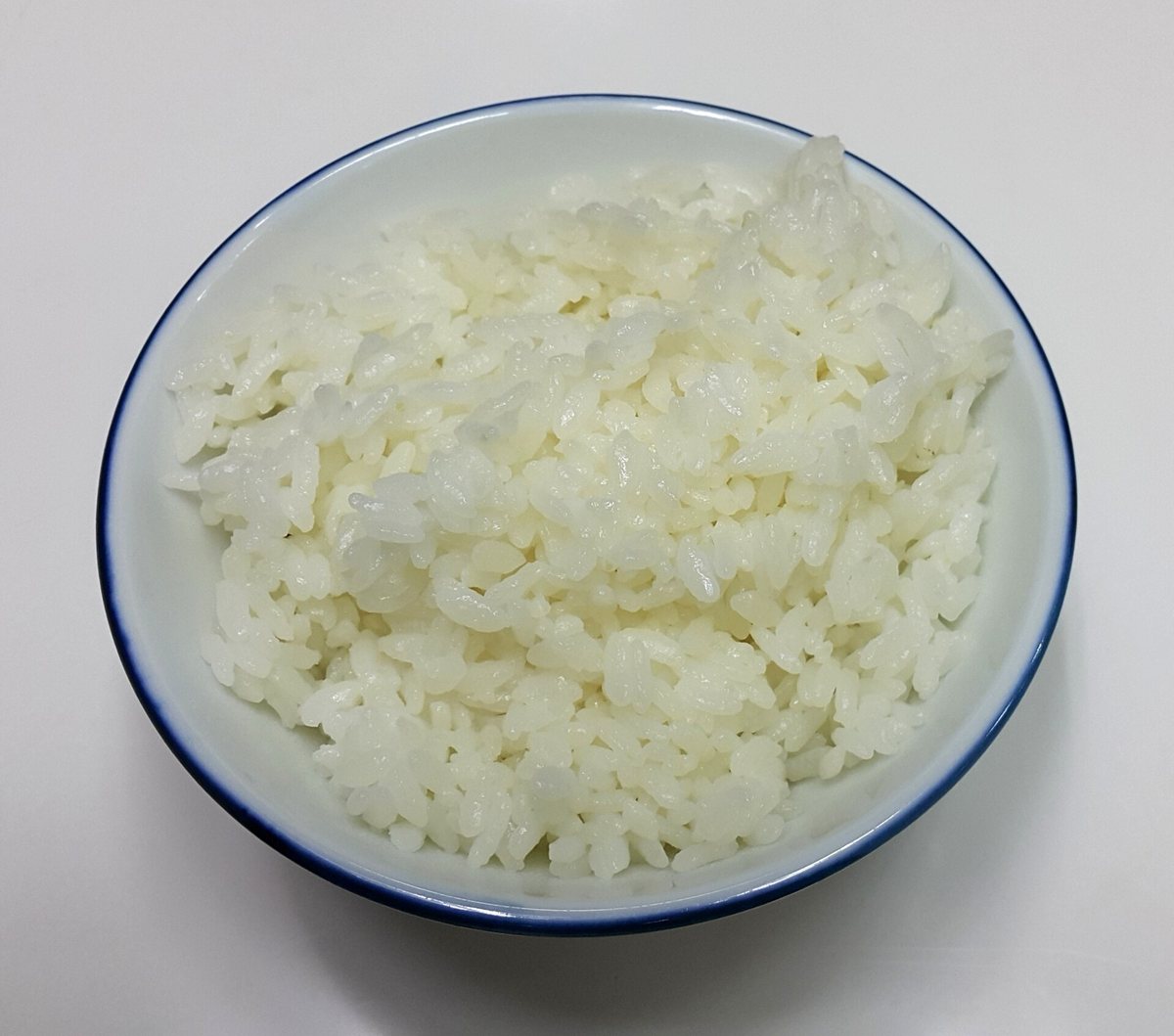
Cooking loosens the starch
In uncooked rice, the starch molecules are neatly lined up, so the grains are hard. When rice is heated with water, water seeps into the starch, the neat arrangement loosens, and the starch becomes soft. This is called gelatinization, and it is why freshly cooked rice is so fluffy.
Cooling makes it line up again
When the loosened starch cools, its molecules bond with each other again and slowly line back up into a shape close to the original. This is called retrogradation. Retrograded starch has a hard, crumbly texture, and water may even seep out of it.
The temperature information is based on the same experiment as in the article, from a study on how temperature affects the retrogradation of starch paste (published in the journal Denpun Kagaku).
Fastest at fridge temperatures
Retrogradation is thought to happen fastest at low temperatures where water does not freeze. In an experiment where starch paste was stored at 0–70℃, the lower the temperature, the faster retrogradation happened, and it happened most easily at 0℃. When freezing rice, it is said to be best to pass through this temperature range quickly.

It depends on the type of rice
Starch comes in 2 kinds, amylose and amylopectin, and amylose retrogrades more easily. In an experiment where cooked rice was stored at 10℃, Koshihikari rice got harder after 1 day and then 2 days, but Milky Queen rice, which has less amylose, hardly changed in firmness even after 2 days.
Want to know more?
- Retrogradation is said to happen most easily when food is about 50–60% water. It does not happen in foods with little water, such as rice crackers or instant noodles.
- Some starch retrogradation happens quickly, and some happens slowly over many days. Amylose is the part that changes quickly, and amylopectin is the part that changes slowly.
- Very sticky starch, like that in glutinous (sticky) rice, does not retrograde easily. In one experiment, no retrogradation was seen even when it was kept at 0℃.

Quick quiz: test yourself
Why does cooked rice get hard when it cools?
Show the answer
- All its water evaporates
- Its starch lines up again
- Its protein hardens
Its starch lines up again Starch that loosened during cooking slowly lines up again as it cools, a change called retrogradation. It happens fastest at low, fridge-like temperatures.
Starch that loosened during cooking slowly lines up again as it cools, a change called retrogradation. It happens fastest at low, fridge-like temperatures.
Next quiz ›Sources
- 加工デンプンの特性と食品への利用法農畜産業振興機構(ALIC) (in Japanese)
- でんぷん糊の老化の温度依存性(澱粉科学, 1972)日本応用糖質科学会(J-STAGE) (in Japanese)
- X線回折による小麦粉二次加工品および澱粉質食品の糊化・老化の解析SPring-8/SACLA 利用研究成果集(高輝度光科学研究センター) (in Japanese)
- Evaluation and Suppression of Retrogradation of Gelatinized Rice Starch (J Nutr Sci Vitaminol, 2019)日本大学ほか(J-STAGE)
This article was written after checking the sources above as of 2026-10-03. Explanations may change as research progresses. Photo credits are shown below each photo.