Why don't spiders get stuck in their own webs?

 There isn't just one reason. Let me explain in 30 seconds.
Spiders combine several tricks to keep from getting stuck in their own webs. In a round web, only the spiral threads are sticky; the radial threads and frame threads are not. On top of that, a spider's legs are covered in fine, branching hairs and a surface that resists sticking, and the spider is careful about how it moves its legs.
A combination of tricks
Spiders don't get tangled in their own webs, not for just one reason but because they combine several tricks. Still, it's not that a spider's legs don't react to the glue at all. Spiders cleverly reduce the force of sticking.
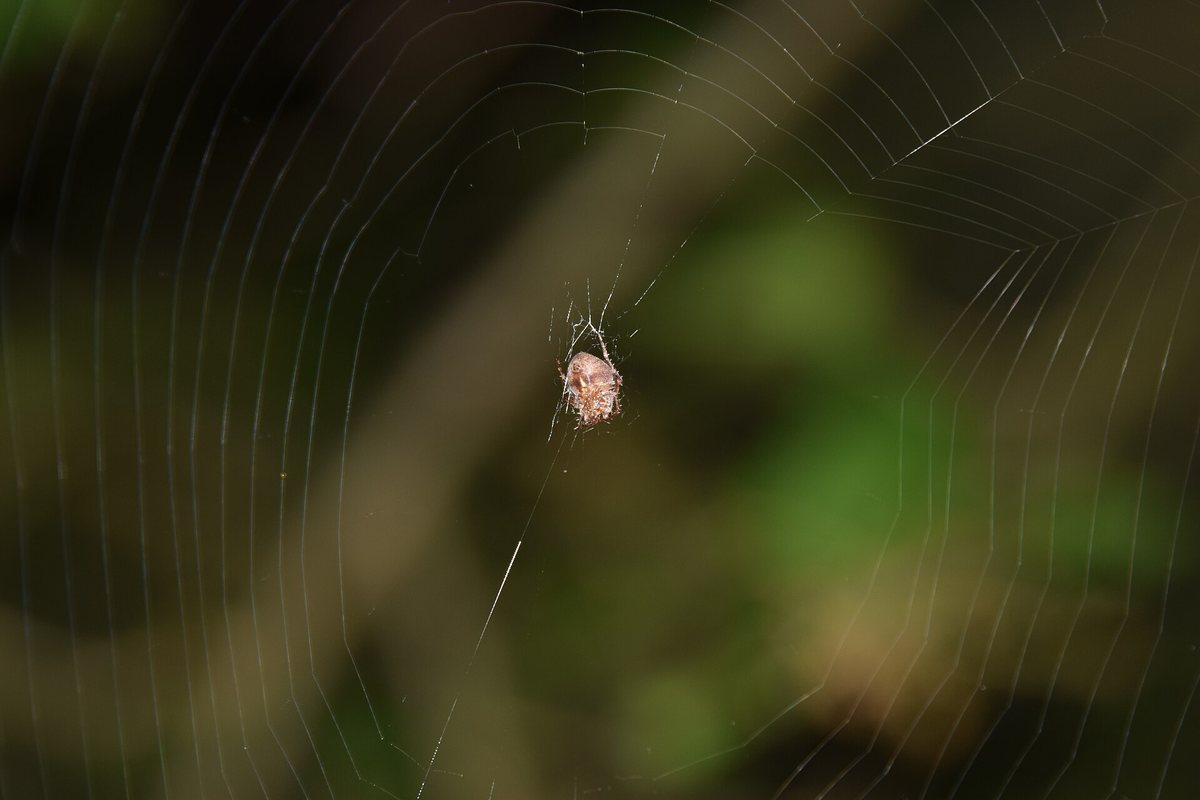
Only the spiral threads are sticky
First, not every thread in a web is sticky. In a round web, only the spiral threads (capture threads) are sticky. The radial threads that run out from the center and the frame threads around the edge of the web are not sticky, and they are strong and tough.

Replacing the scaffolding thread
When building a web, a spider first lays down the radial threads and then spins a temporary spiral from the center outward to use as scaffolding. After that, it turns around and works its way back, rolling up the scaffolding thread and replacing it with closely spaced sticky spiral threads. In many spiders the scaffolding thread is removed, but in golden orb-weavers and their relatives, the non-sticky scaffolding thread stays as part of the web.
Leg hairs and a non-stick surface
Even so, while building a single web, a spider presses on the sticky threads with its legs hundreds to thousands of times. A study published in 2012 by the Smithsonian Tropical Research Institute and others found that spider legs are covered in fine, branching hairs, and that glue droplets slide along the hairs. The surface of the legs is also thought to have a substance that resists sticking. When the legs were washed to remove it, they stuck more strongly to the threads. Spiders are also careful about how they move their legs, which reduces the force of sticking.
Want to know more?
- The 2012 study looked at 2 kinds of spiders, a golden orb-weaver relative and a spiny orb-weaver relative, and watched leg movements and glue droplets with video cameras fitted with magnifying lenses and with microscopes.
- The strong, stiff radial threads and frame threads also soften the impact when an insect hits the web, helping keep the web from breaking.
- Some spiders build a hideout of rolled-up leaves beside the web and connect it to the center of the web with 1 thread, so they can feel the shaking when an insect gets caught.

Quick quiz: test yourself
In an orb web, which threads are sticky?
Show the answer
- The radial threads
- The frame threads
- The spiral threads
The spiral threads Only the spiral capture threads are sticky; the radial and frame threads are not. Spiders also rely on hairy legs and careful leg movements.
Only the spiral capture threads are sticky; the radial and frame threads are not. Spiders also rely on hairy legs and careful leg movements.
Next quiz ›Sources
- Fancy footwork and non-stick leg coating helps spiders not stick to their own websSmithsonian Tropical Research Institute(ScienceDaily掲載のプレスリリース)
- Orb Web Construction and FeaturesVirginia Tech Department of Entomology
- Junctional microstructure of the non-sticky spiral scaffold in the golden orb web spider, Trichonephila clavata (Applied Microscopy, 2025)PubMed Central(査読論文)
This article was written after checking the sources above as of 2026-10-03. Explanations may change as research progresses. Photo credits are shown below each photo.