Do chameleons change color with their mood?

 It's true that mood can change their color, but that's not the whole story. Let me explain in 30 seconds.
Yes, a chameleon's color can change with its mood. But it changes not only with feelings like fear or anger, but also with the amount of light and the temperature. The main roles of color change are thought to be signaling to other chameleons and controlling body temperature. Chameleons cannot exactly match the colors and patterns around them.
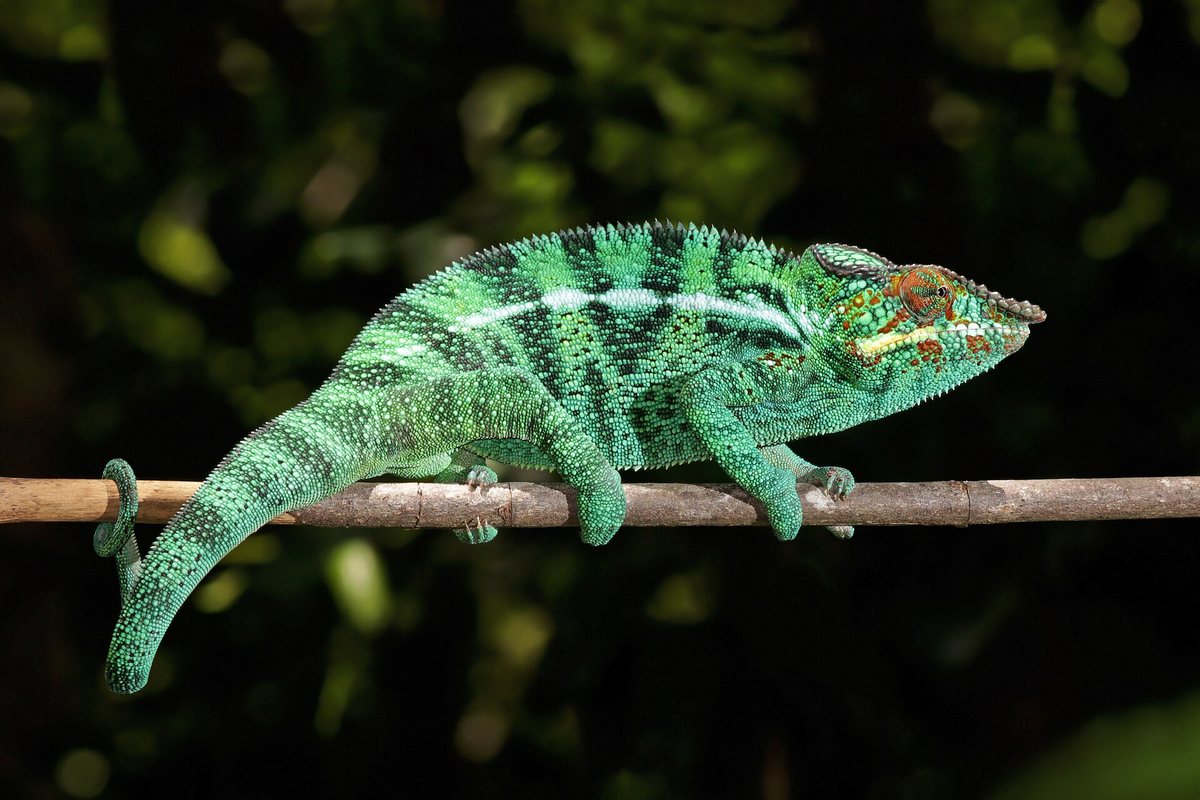
Mood, light, and temperature all play a part
A chameleon's body color can change with its mood. According to San Diego Zoo, its color changes with feelings such as fear and anger, and also with the amount of light, the temperature, and the humidity. The change can happen in a few seconds, or it can take several minutes.
Color is a signal to others
Color change plays an important role as a signal between chameleons. When males fight each other or approach a female, their colors change a lot. Males that can show brighter colors are stronger, and a male that loses turns brown or gray. Females also use color to show whether they accept or reject a male.
Not an exact match for the surroundings
Many people imagine that chameleons "change to match their surroundings," but that is not quite right. Chameleons cannot turn just any color; each species has its own set of colors and patterns. In an experiment on one African chameleon species, published in 2025, the chameleons darkened their bodies on a black background and moved closer to a few colors such as yellow, but they did not match the background's patterns.

Tiny crystals in the skin
Cells in the skin are involved in how the color changes. San Diego Zoo explains that layers of cells containing pigment lie on top of each other, and colors are made as these cells expand and shrink. In addition, a 2015 study by the University of Geneva in Switzerland and others found that panther chameleons have a layer of very tiny crystals, neatly lined up, in their skin, and that they change the color of the light they reflect by changing the spacing between the crystals. When a male gets excited, the spaces between the crystals widen. Then skin that was green when calm turns yellow or orange.
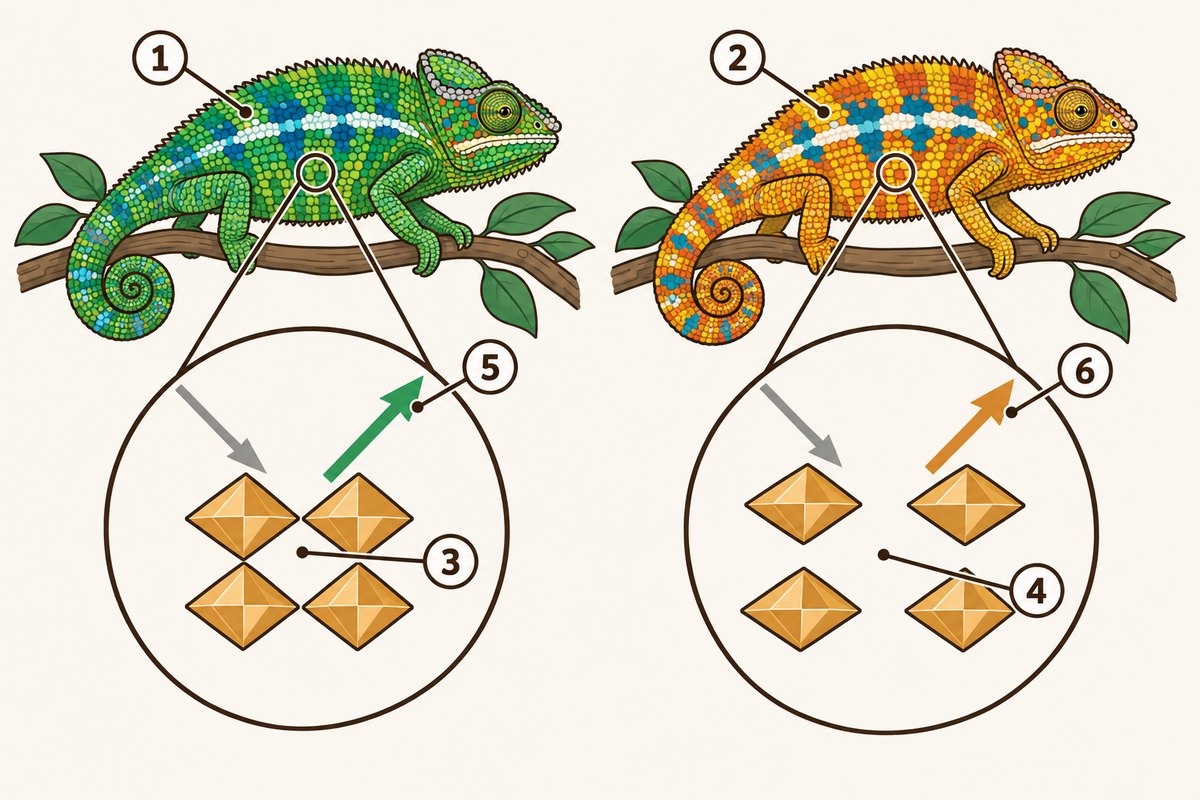
- 1Calm (green)
- 2Excited (yellow to orange)
- 3Crystals close together
- 4Crystals spread apart
- 5Reflected light (looks green)
- 6Reflected light (looks yellow to orange)
Want to know more?
- Panther chameleon skin also has a layer of larger crystals that reflects a lot of near-infrared light, which our eyes cannot see. It may help protect the body from the heat of strong sunlight.
- A chameleon can move its left and right eyes separately.
- Newborn young look like small adults, but their colors and patterns are not as bright as an adult's.

Quick quiz: test yourself
What is color change mainly for in chameleons?
Show the answer
- Signals and body temperature
- Matching background patterns
- Luring in prey
Signals and body temperature Color change is thought to be mainly for signaling to other chameleons and controlling body temperature. They cannot match background patterns.
Color change is thought to be mainly for signaling to other chameleons and controlling body temperature. They cannot match background patterns.
Next quiz ›Sources
- ChameleonSan Diego Zoo Wildlife Alliance
- Photonic crystals cause active colour change in chameleons (Nature Communications, 2015)University of Geneva ほか(査読論文)
- Flap-necked chameleons change colour to match their background (Biology Letters, 2025)PubMed Central(査読論文)
This article was written after checking the sources above as of 2026-10-03. Explanations may change as research progresses. Photo credits are shown below each photo.