Why does chocolate melt in your mouth?

 The secret lies in the fat inside chocolate.
Because cocoa butter, the fat in chocolate, melts at a temperature close to body temperature. Cocoa butter can form several kinds of crystals, but chocolate makers line up the crystals that melt at about 32–34℃. That is why chocolate snaps cleanly at room temperature but melts once it is in your mouth.
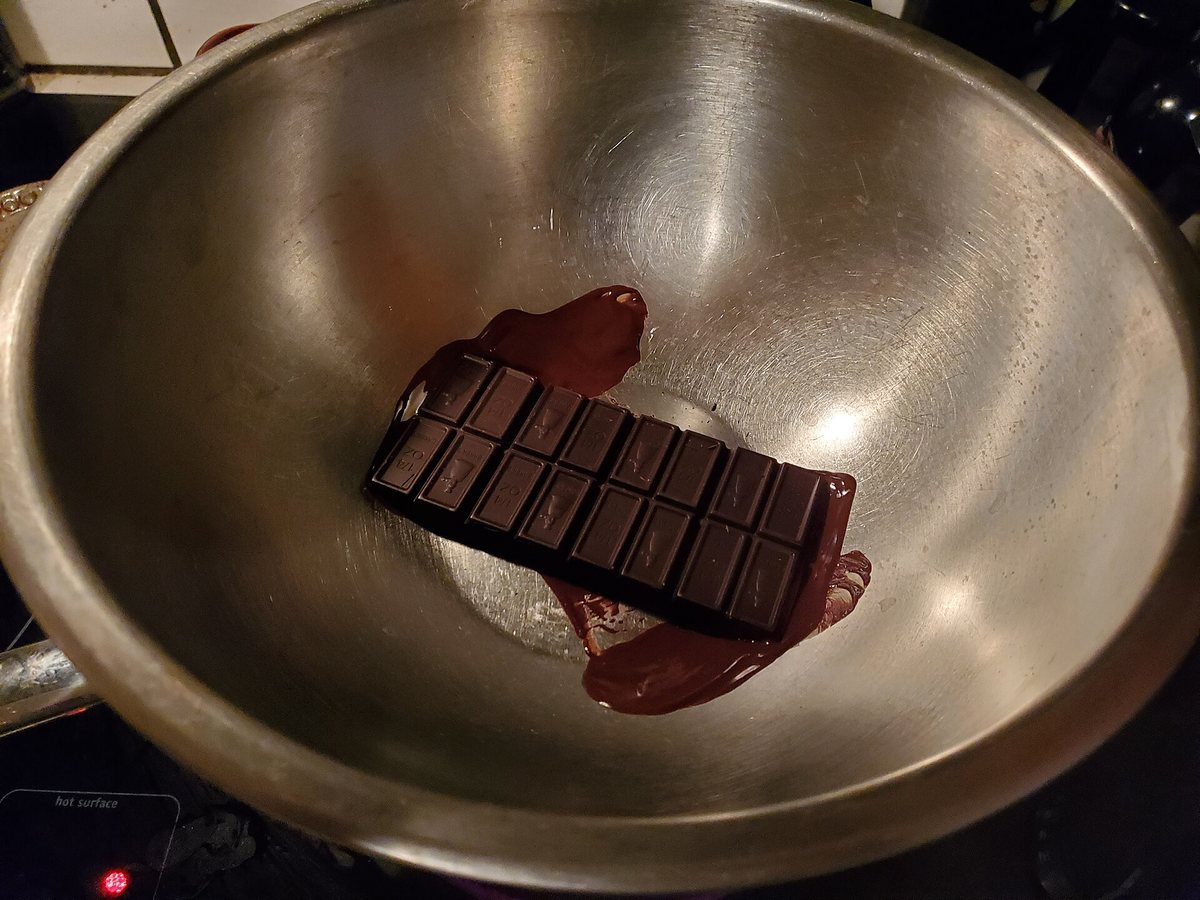
The star is a fat: cocoa butter
Chocolate is made of tiny particles of cacao and sugar spread through cocoa butter, the fat from cacao beans. A paper by researchers at the University of Wisconsin–Madison explains that cocoa butter decides how chocolate melts and how hard it is. Cocoa butter is a mix of fats that melt at slightly different temperatures, so it is hard and snappy at room temperature (25℃) but melts in your mouth.
Crystal shape changes the melting point
Cocoa butter is known to form 6 kinds of crystals, made from the same ingredients but with their molecules lined up in different ways. According to materials from the chocolate research group at the Massachusetts Institute of Technology (MIT), their melting points range from about 17℃ to about 36℃. Among them, the form called "Form V" melts at about 34℃. It is glossy, snaps cleanly, and melts at a temperature close to body temperature.
Form V crystals are said to melt at about 34℃.
Tempering lines up the crystals
To make good chocolate, chocolate makers control the temperature in a process called "tempering." They stir melted chocolate while cooling it and warming it again, so that the Form V crystals line up. Teaching materials from the Royal Society of Chemistry (RSC) explain that ordinary chocolate melts at around 33–35℃, which suggests it contains Form V.

Melting and rehardening changes the texture
Chocolate that has melted and then hardened again can have different crystal forms and a lower melting point. According to the RSC, such chocolate does not snap cleanly and feels less smooth in the mouth. The changed texture of chocolate that melts and hardens again on a hot day is thought to come from the same process.
Want to know more?
- Chocolate can make your mouth feel a little cool when you eat it. That is because a solid takes in heat from its surroundings as it melts.
- Cocoa butter's "Form VI" crystals are said to form when Form V chocolate is left at room temperature for about 4 months.
- The more oleic acid, a component of fat, cocoa butter contains, the harder it is for its molecules to pack tightly together, and the lower its melting point becomes.

Quick quiz: test yourself
Why does chocolate melt in your mouth?
Show the answer
- Cocoa butter melts near body heat
- Sugar dissolves in saliva
- The milk in it melts
Cocoa butter melts near body heat Chocolate makers line up the cocoa butter in a crystal form that melts close to body temperature, so it melts in your mouth.
Chocolate makers line up the cocoa butter in a crystal form that melts close to body temperature, so it melts in your mouth.
Next quiz ›Sources
- Microstructure and Rheology of ChocolateAnnual Review of Materials Research(University of Wisconsin–Madison の研究者による総説)
- Chocolate ScienceMIT Laboratory for Chocolate Science
- The structure and properties of chocolateRoyal Society of Chemistry (RSC) Education
This article was written after checking the sources above as of 2026-10-03. Explanations may change as research progresses. Photo credits are shown below each photo.