What are woodpeckers doing when they peck wood?

 There isn't just one reason. Let me tell you in 30 seconds.
Woodpeckers peck wood for three main reasons: to find and eat insects living inside the wood, to dig holes for their nests, and to send signals to other woodpeckers by tapping on wood that makes a loud, ringing sound. Pecking to send signals is called "drumming," and it only slightly scratches the surface of the wood.
Two main kinds of pecking
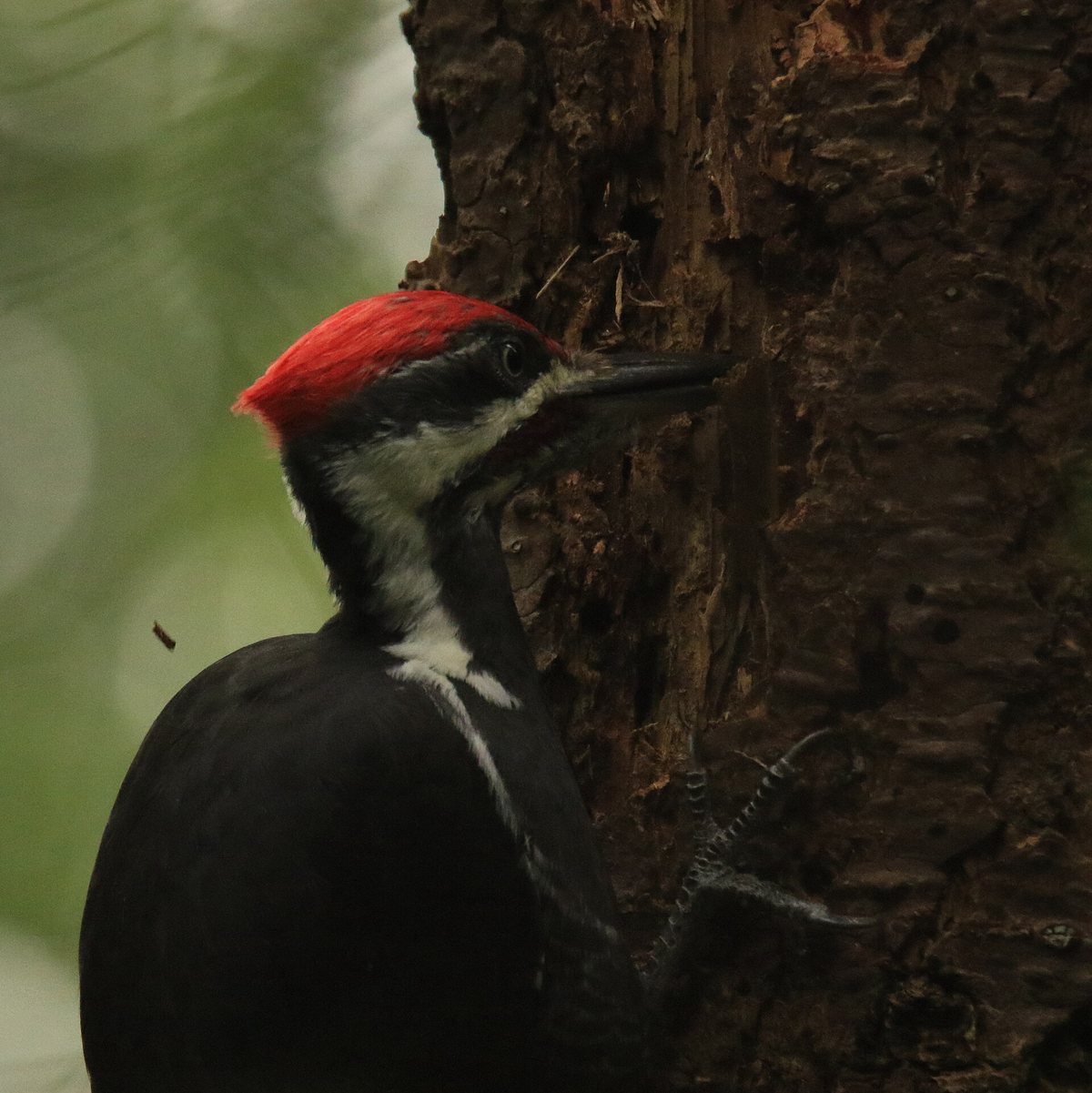
The National Audubon Society divides woodpecker pecking into two kinds: "drumming," which is tapping to make a sound, and "drilling," which is making holes in wood. Woodpeckers make holes mainly when they are looking for insects inside the wood and when they are digging nest holes.
Looking for insects in the wood
The pileated woodpecker, which lives in North America, pecks at dead trees, stumps, and fallen logs to look for carpenter ants, which make tunnels inside wood. According to the Cornell Lab of Ornithology, the holes it digs can be more than 30 cm long. It pulls beetle larvae out from deep in the wood with its long tongue, which has barbs at the tip, and eats them.
Digging holes for nests
Woodpeckers dig holes in trees to use as nests. In pileated woodpeckers, the male usually starts digging, and the female helps as the nest gets close to done. Building a nest usually takes 3–6 weeks, and the inside is lined with nothing but wood chips. Holes dug by woodpeckers later become homes for other birds too, such as owls and bluebirds.
Drumming: sending signals with sound
Drumming means quickly tapping on a branch or dead trunk that rings well, to make a loud sound. Woodpeckers use it to call a mate or to announce their territory, and one bird may tap more than 8,000 times in a day. Drumming only slightly scratches the surface of the wood and does not harm the tree.

Is its head OK?
You may wonder whether a woodpecker's head is OK after pecking so hard. For a long time, people thought the skull worked like a cushion to protect the brain. But a 2022 study of 3 species of woodpeckers reported that the skull does not absorb the shock and is used like a hard hammer instead. By calculation, the strain on the brain is said to stay below the level known to cause concussions in primates, but research into exactly how this works is still going on.
Want to know more?
- Acorn woodpeckers and their relatives fit acorns into holes they make in trees, storing them to eat later.
- Sapsuckers make rows of small holes in tree trunks and come back again and again to eat the sap that oozes out and the insects caught in it.
- Researchers say that because woodpeckers often choose to peck at dying trees, they can also be a sign that a tree is unhealthy.

Quick quiz: test yourself
What is one reason woodpeckers peck at trees?
Show the answer
- To find insects to eat
- To sharpen their beaks
- To warm up their bodies
To find insects to eat They look for insects inside the wood to eat. They also dig nest holes and drum on echoing wood to send signals to other woodpeckers.
They look for insects inside the wood to eat. They also dig nest holes and drum on echoing wood to send signals to other woodpeckers.
Next quiz ›Sources
- Wait—Do Woodpeckers Kill Trees?National Audubon Society
- Pileated Woodpecker Life HistoryCornell Lab of Ornithology (All About Birds)
- Woodpeckers minimize cranial absorption of shocks (Current Biology, 2022)Europe PMC(論文の要旨)
This article was written after checking the sources above as of 2026-10-03. Explanations may change as research progresses. Photo credits are shown below each photo.