How does frost form on the ground and leaves?

 Let me explain how frost forms, in 30 seconds first.
Frost forms on cold nights that are clear with little wind. The surfaces of the ground and leaves cool below 0℃, and water vapor in the nearby air turns into ice crystals that stick to them. Sometimes the water vapor turns straight into ice without becoming droplets, and sometimes dew that formed earlier freezes later.
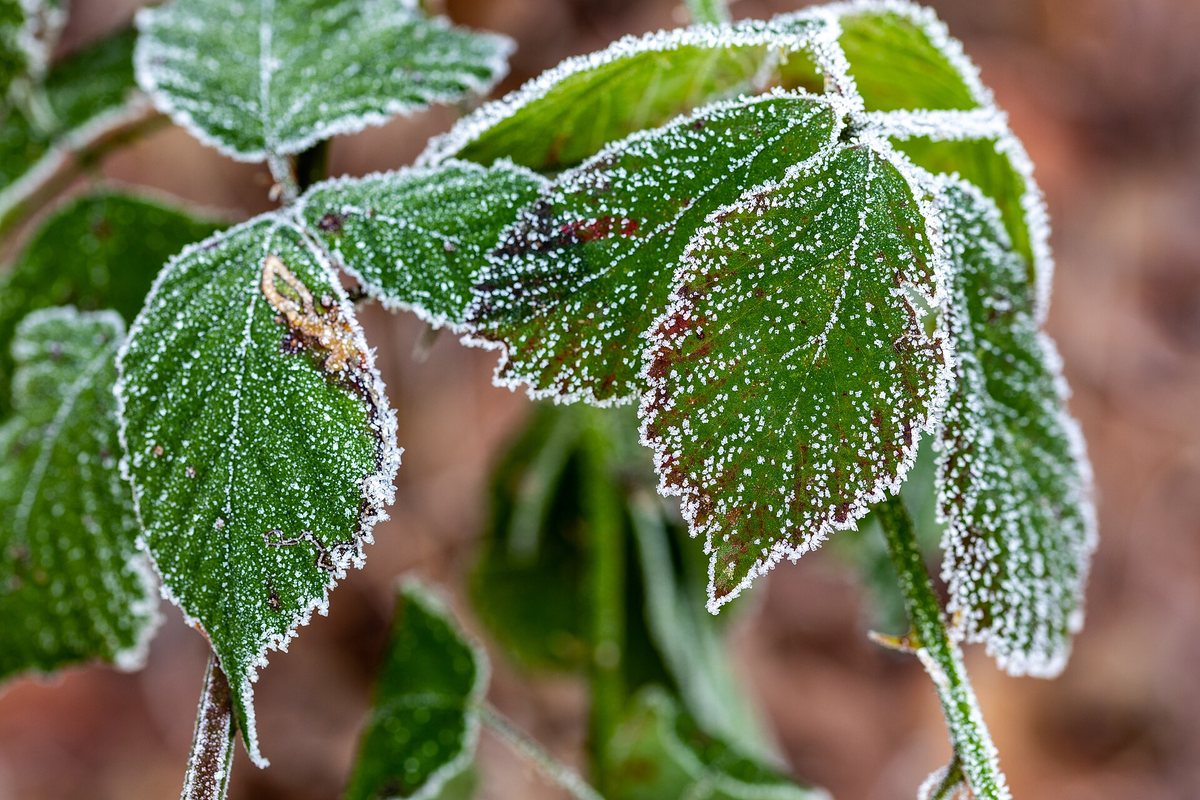
Frost does not fall from the sky
Frost is what happens when water vapor in the air (water as a gas) sticks to surfaces such as cars and grass as ice crystals. People sometimes say frost "falls," but it does not actually fall from the sky. It forms right on the spot, on cold ground and leaves. It forms the same way as morning dew. The difference is that the surface is colder than 0℃.
2 ways frost forms
According to the UK's Met Office, there are 2 ways frost forms. In one, the surface cools to 0℃ before dew can form, and the water vapor turns straight into ice crystals without becoming water droplets. This makes fluffy, feather-like frost. In the other, dew (water droplets) forms first and then freezes later, which makes ice in roundish grains.
It forms on clear, calm nights
Frost forms most easily on clear nights with little wind. At night, there is no heat from the sun, so the ground and grass lose their heat to the sky and cool down. This is called radiative cooling. Clouds act like a blanket and keep things from cooling, and wind mixes the cold air with the air around it, so frost is less likely to form. Fog also gets in the way of surfaces cooling.

It can form even above 0℃
According to the Fukuoka Regional Headquarters of the Japan Meteorological Agency, on clear, calm nights the area near the ground can drop to 0℃ or below and frost can form, even when the air temperature measured 1.5m above the ground is around 4℃. In general, frost forms more easily when the air temperature drops to 3–4℃, and basins and valley floors, where cold air tends to collect, are especially likely places for frost.
Want to know more?
- When cars or people step on frost on the ground, the crystals can melt a little and then freeze again, turning into slippery ice.
- Concrete and roads can store heat, so sometimes frost forms only on the lawn or grass beside them. Frost on grass can sometimes be seen even in late spring or early summer.
- At the Fukuoka Regional Headquarters, frost is observed not by machines but by staff members looking with their own eyes.

Quick quiz: test yourself
How does frost form?
Show the answer
- It falls from the sky
- Water vapor turns to ice on surfaces
- Water seeps from the ground and freezes
Water vapor turns to ice on surfaces When the ground or leaves cool below 0℃, water vapor in the nearby air turns into ice crystals right on the surface. It does not fall from the sky.
When the ground or leaves cool below 0℃, water vapor in the nearby air turns into ice crystals right on the surface. It does not fall from the sky.
Next quiz ›Sources
- What is frost and ice?Met Office
- はれるんマガジン 第17号「霜は晴れた日におりるのはどうして?」福岡管区気象台 (in Japanese)
This article was written after checking the sources above as of 2026-10-03. Explanations may change as research progresses. Photo credits are shown below each photo.