How can dandelion seeds fly so far?

 First, let me tell you what research found, in 30 seconds.
A dandelion's fluff is a parachute full of gaps, made of about 100 fine hairs. Air flowing through the gaps between the hairs creates a steady ring of air behind the fluff, so the seed falls slowly. Meanwhile, sideways winds carry it along. However, only some seeds fly far.
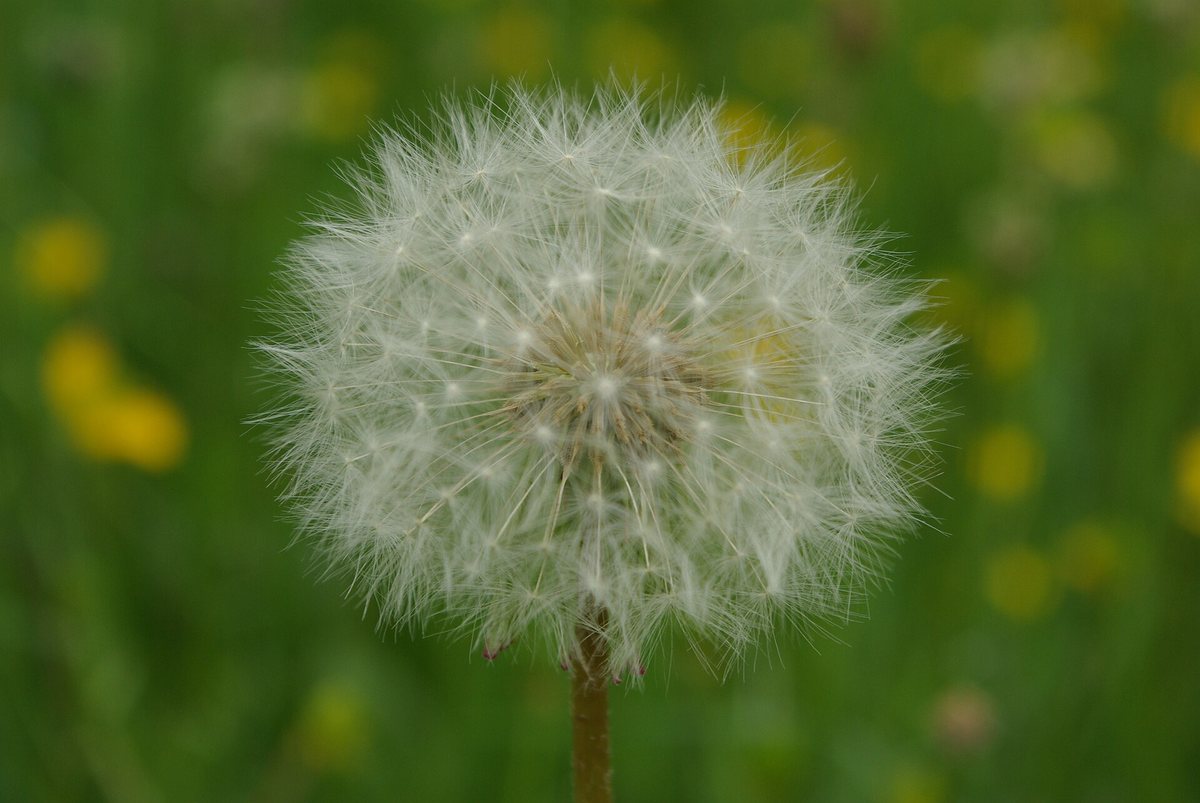
The fluff is made of about 100 hairs
On top of a dandelion seed is a tuft of fluff called a pappus. When a research team from the University of Edinburgh and others studied it, they found that one pappus is made of about 100 fine hairs on average, and the gaps between the hairs take up about 92% of the whole. It looks see-through, but this is the trick that helps it fly well.
A ring of air forms behind it
The team built a device that blows air from below to keep a seed floating in midair, and filmed the airflow around it. They saw a ring of air swirling in a donut shape a little way behind the pappus. Even though this ring was separate from the pappus, it stayed in the same place instead of drifting away. The air passing through the gaps between the hairs is thought to keep the ring steady.

Falling slowly lets the wind carry it
Compared by the area of the hairs themselves, the pappus met more than 4 times as much air resistance as a solid disk with no gaps. So the seed falls slowly: in still air, it falls at about 39 cm per second. While it slowly falls, sideways winds and rising air carry the seed far away.
The numbers come from the same research paper as the text.
Only some seeds fly far
However, most seeds are thought to land within 2 m of the parent plant. On warm, dry, windy days, some seeds fly much farther, and one estimate suggests some seeds are carried more than 1 km. Scientists have also found that the pappus closes on humid days and opens wide on dry, windy days.
Want to know more?
- More than half of each hair in the pappus is hollow, so it is light and made with very little material.
- The pappus can open and close in response to moisture in the air, without using any energy.
- Humid days often have weak winds, so closing the pappus is thought to be a way of choosing the right day to take off.

Quick quiz: test yourself
Why do dandelion seeds fall so slowly?
Show the answer
- Air flows through gaps in the fluff
- The fluff spins round and round
- The bristles repel water
Air flows through gaps in the fluff Air flows through the gaps between the thin bristles, and a steady ring of air forms behind the fluff, so the seed falls slowly.
Air flows through the gaps between the thin bristles, and a steady ring of air forms behind the fluff, so the seed falls slowly.
Next quiz ›Sources
- A separated vortex ring underlies the flight of the dandelion (Nature, 2018, accepted manuscript)University of Edinburgh / University of Strathclyde repository
- Engineers uncover secret ‘thinking’ behind dandelions’ seed dispersalImperial College London
This article was written after checking the sources above as of 2026-10-03. Explanations may change as research progresses. Photo credits are shown below each photo.