Why does the sea look blue?

 In fact, the reason lies in the water itself.
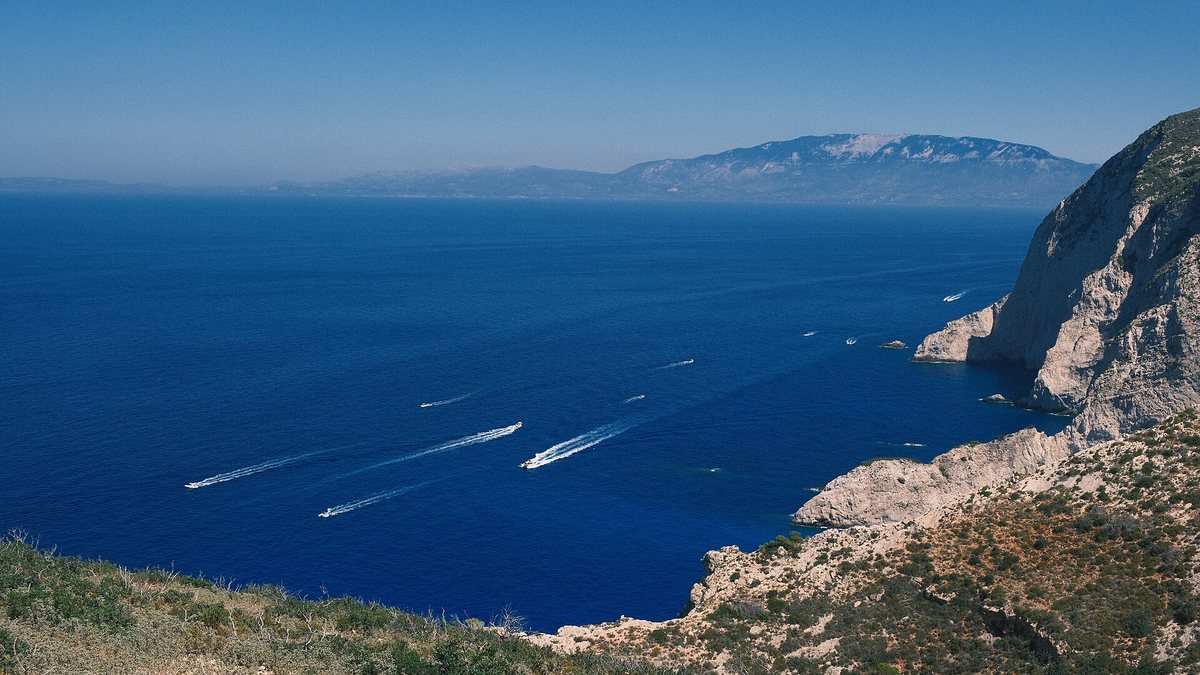
The sea looks blue because water easily absorbs the reddish colors in sunlight, leaving the blue. The remaining blue light bounces around in the water and reaches our eyes. The surface does reflect the color of the sky, but the sea is still blue when you dive in, which shows that the water itself creates the blue color.
Water absorbs red light
Sunlight is a mix of many colors, from red to violet. According to the U.S. National Oceanic and Atmospheric Administration (NOAA), seawater easily absorbs the reddish colors in light and, like a filter, leaves the bluish colors behind. That is why the sea looks blue.
It's not just reflecting the sky
People sometimes say, "The sea is blue because it reflects the color of the sky." Woods Hole Oceanographic Institution explains that the surface of the sea does reflect the color of the sky. That is why the sea looks deep blue on sunny days and gray on cloudy days. But the blue does not disappear when you dive into the sea. The blue under the water is a color made by the water itself.

Colors fade away as it gets deeper
As light travels through water, the long-wavelength colors, red and orange, are absorbed first and almost disappear within a few meters. Next, yellow and green fade away, and the short-wavelength colors, blue and violet, reach the deepest. The remaining blue light bounces off tiny particles in the water, so the water looks blue.
Bar lengths are only a rough guide to show the order.
Some seas look green or brown
The color of the sea is not always the same. According to NASA, seas with a lot of phytoplankton (tiny drifting plants) look greenish, because their chlorophyll absorbs red and blue light and gives back green light. Where soil washes in from rivers, the sea looks brownish, and where it is shallow with white sand or coral, it looks a bright, emerald-like blue.
Want to know more?
- According to NOAA, very little light reaches below a depth of 200 meters, and no light at all reaches below 1000 meters.
- Many deep-sea creatures have red or black bodies. At depths where only blue light reaches, a red body is actually harder to see.
- Studying the color of the sea with satellites reveals things like the amount of phytoplankton, which helps scientists in their research.

Quick quiz: test yourself
What is the main reason the sea looks blue?
Show the answer
- Water absorbs reddish light
- It reflects the color of the sky
- The salt in seawater is blue
Water absorbs reddish light Water easily absorbs the reddish colors in sunlight, leaving blue light. The sea is still blue when you dive in, so the water itself makes the blue.
Water easily absorbs the reddish colors in sunlight, leaving blue light. The sea is still blue when you dive in, so the water itself makes the blue.
Next quiz ›Sources
- Why is the ocean blue?NOAA National Ocean Service
- Why is the ocean blue?Woods Hole Oceanographic Institution
- What Color is the Ocean?NASA
This article was written after checking the sources above as of 2026-10-03. Explanations may change as research progresses. Photo credits are shown below each photo.