Are shooting stars really falling stars?

 Let me first tell you what shooting stars really are, in 30 seconds.
Shooting stars are not stars falling from the sky. They are tiny bits of dust drifting through space that plunge into Earth's atmosphere at tremendous speed and glow high in the sky. They glow at a height of roughly 120 km to 80 km, and most of the dust vaporizes before it reaches the ground.
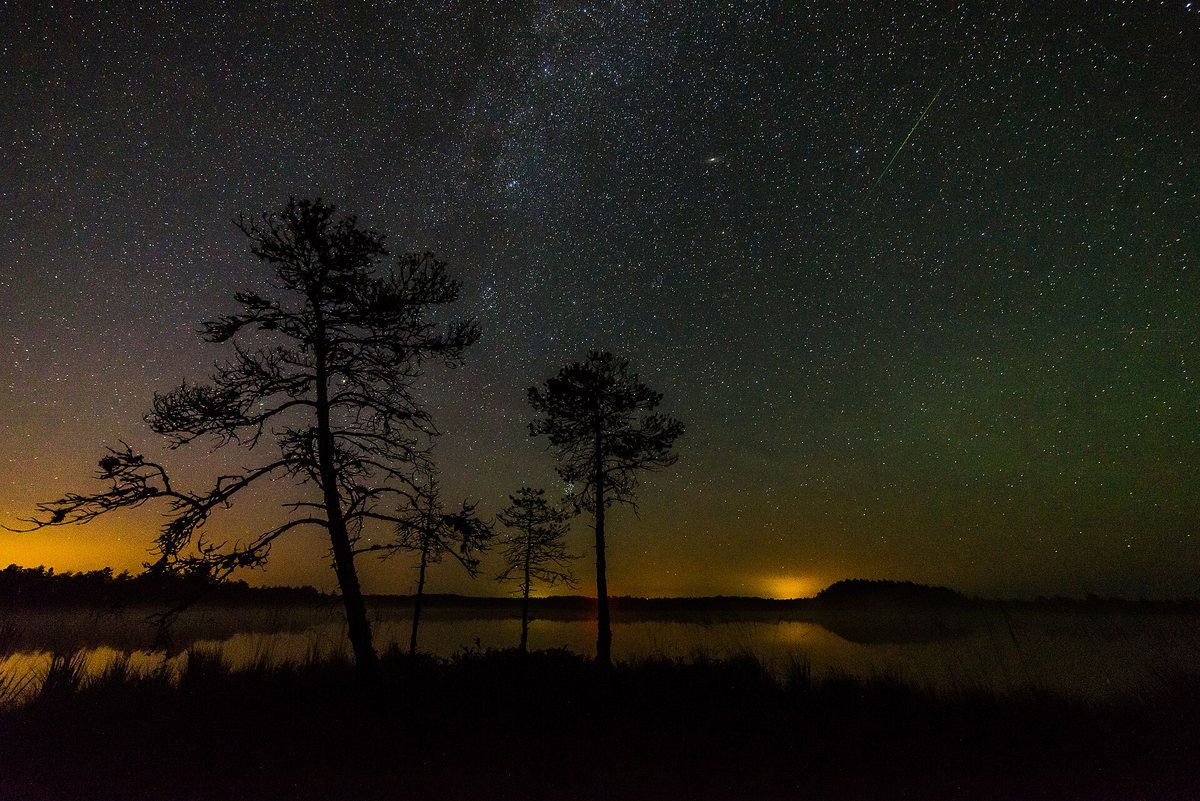
Shooting stars start as tiny pieces
The stars shining in the night sky and shooting stars are completely different things. A shooting star starts out as a small piece of rock or ice in space. They range in size from a grain of sand to a large boulder, and while they are in space they are called "meteoroids".
So fast they glow high in the sky
Meteoroids rush into Earth's atmosphere at speeds from several tens of km per second up to about 70 km per second. Because they are so fast, the air in front of them is squeezed hard and becomes very hot, and the dust vaporizes. At that moment, the vaporized dust and the gases in the surrounding air give off light. This is a shooting star (a meteor). They usually glow at a height of about 120 km to 80 km.

Names that change with location
The same object gets a different name depending on where it is. In space, it is a meteoroid. When it glows in the atmosphere, it is a meteor. If it does not burn up and reaches the ground, it is a meteorite. A very bright shooting star is called a fireball, and sometimes a meteorite falls to the ground after a fireball.
Falling on Earth every day
According to NASA (the U.S. National Aeronautics and Space Administration), about 44 tons of space dust and other material is thought to fall on Earth every day, and most of it vaporizes in the atmosphere. Even on an ordinary night, you can see a few shooting stars an hour, and when Earth passes through a trail of dust left behind by a comet, the number jumps up in what is called a meteor shower.
Want to know more?
- The color of a shooting star depends on the combination of light given off by substances in the dust, such as sodium, iron and magnesium, and by nitrogen and oxygen in the air.
- A shooting star can leave behind a faintly glowing trail called a "meteor train", which can last from a few seconds to more than 10 minutes.
- The shooting stars of the Perseid meteor shower, seen every August, are dust from Comet Swift-Tuttle, which comes close to the sun about every 135 years.

Quick quiz: test yourself
What is a shooting star really?
Show the answer
- A star falling from the sky
- Space dust glowing in the air
- Light left over from lightning
Space dust glowing in the air Tiny bits of space dust plunge into Earth's atmosphere at tremendous speed and glow high in the sky. Most vaporize before reaching the ground.
Tiny bits of space dust plunge into Earth's atmosphere at tremendous speed and glow high in the sky. Most vaporize before reaching the ground.
Next quiz ›Sources
- Meteors and MeteoritesNASA Science
- 流星天文学辞典(日本天文学会) (in Japanese)
- I Didn't Know That!: Shooting StarsU.S. National Park Service
This article was written after checking the sources above as of 2026-10-03. Explanations may change as research progresses. Photo credits are shown below each photo.