Why do cut apples turn brown?

 The cause is the enzyme inside the apple, together with the air.
A cut apple turns brown because an enzyme in its flesh meets oxygen in the air and changes the polyphenols in the flesh into brown substances. This change is called "enzymatic browning." If you pour lemon juice on it, the vitamin C reacts with oxygen first, and the sourness also makes the enzyme work poorly, so the apple is slower to turn brown.
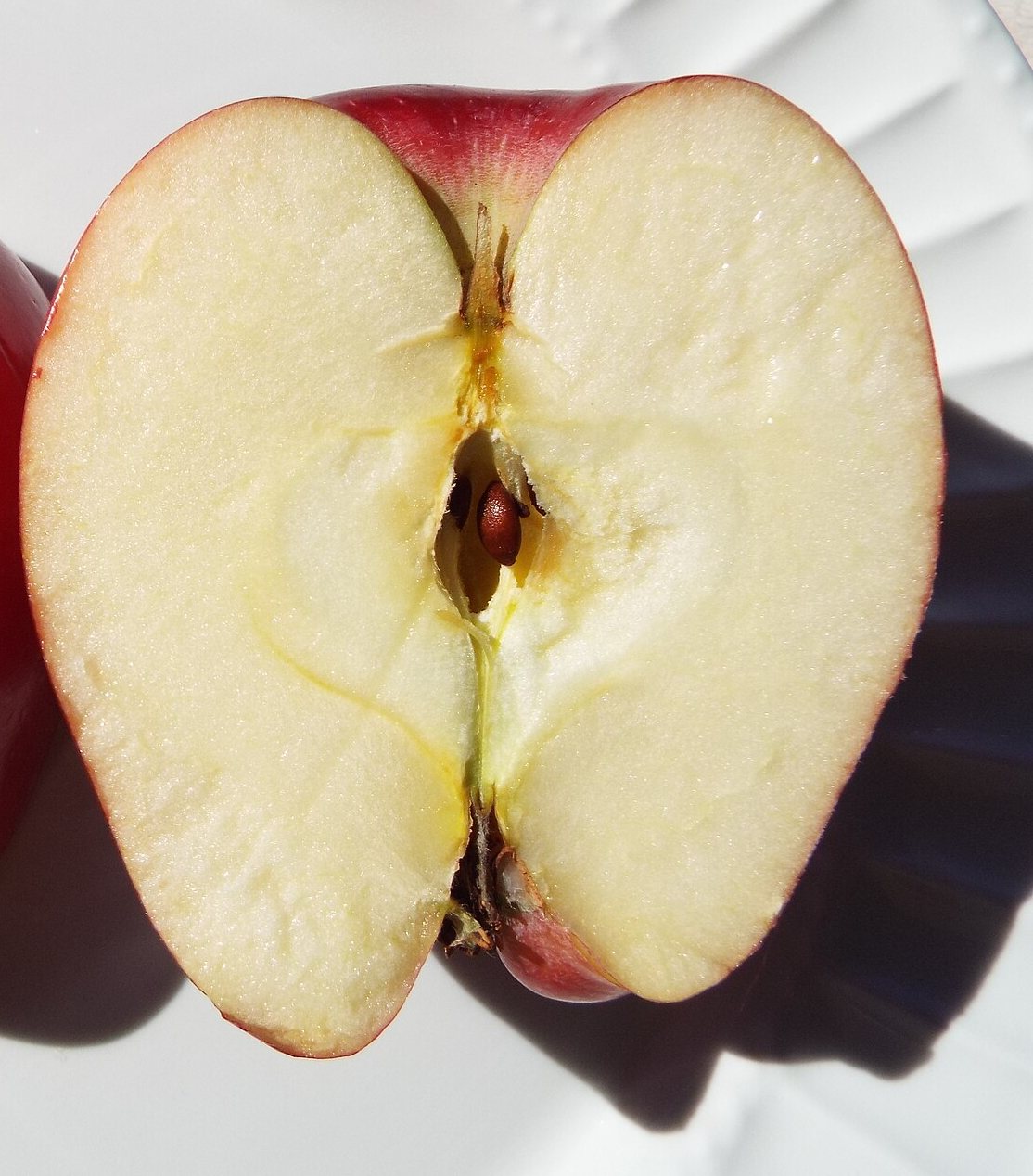
Cutting brings enzyme and oxygen together
A food science professor at the University of Massachusetts Amherst explained in the magazine Scientific American that when an apple is cut or bruised, oxygen gets into the damaged tissue. Then an enzyme called "polyphenol oxidase" changes the polyphenols in the flesh into other substances.
Where the brown color comes from
The substances made by the enzyme have no color at first. They turn brown when they join with things like proteins, or link together into bigger molecules. An explanation from the University of Wisconsin calls this reaction "enzymatic browning" and notes that the same thing happens with pears, bananas, and eggplants.
Some varieties brown faster
Almost all plants have this enzyme, but how strongly it works, and how much of the starting ingredients there are, depends on the variety, how the fruit was grown, and how ripe it is. That is why some apples turn brown quickly and others do not. Even when an apple turns brown, what has changed is its color and look.

Two reasons lemon juice works
According to an explanation from the University of California, Santa Barbara, the vitamin C (ascorbic acid) in lemon juice reacts with oxygen before the enzyme can. Lemon juice is also very sour, and this enzyme does not work well in sour conditions. According to Penn State University, a vitamin C solution is said to be even better than lemon juice at preventing browning.
Want to know more?
- Coating apple slices with sugar or syrup makes it harder for oxygen to reach the surface, so they turn brown more slowly.
- Heating apples stops the enzyme from working, so apples cooked into jam or sauce do not turn brown the way freshly cut ones do.
- The brown color of tea, coffee, and cocoa also comes from this enzyme working while they are being made.

Quick quiz: test yourself
Why does a cut apple turn brown?
Show the answer
- The flesh dries out
- An enzyme works with oxygen
- The apple starts to go bad
An enzyme works with oxygen An enzyme in the flesh meets oxygen in the air and turns polyphenols into brown substances. This is called enzymatic browning.
An enzyme in the flesh meets oxygen in the air and turns polyphenols into brown substances. This is called enzymatic browning.
Next quiz ›Sources
- Why do apple slices turn brown after being cut?Scientific American (Lynne McLandsborough, University of Massachusetts Amherst)
- Carry Out Science: Apple BrowningUniversity of Wisconsin–Madison Division of Extension
- Why does lemon juice prevent an apple from turning brown?UCSB Science Line (University of California, Santa Barbara)
- Preserving Color and Preventing Browning of FoodsPenn State Extension
This article was written after checking the sources above as of 2026-10-03. Explanations may change as research progresses. Photo credits are shown below each photo.