Why does bread rise and get so fluffy?

 In fact, there is an important time before baking, too.
Inside bread dough, yeast eats sugar and gives off carbon dioxide, and a network called "gluten," made from wheat proteins, traps that gas like balloons. The dough rises a lot during proofing before baking, and then rises once more from the heat right after it goes into the oven.
Yeast makes gas
Bread dough contains yeast, living things so tiny they cannot be seen. According to an explanation from Washington State University, yeast eats sugar and gives off gases such as carbon dioxide. This process is called "fermentation."
Gluten traps the gas
When you add water to flour and knead it, the proteins in the flour link up and form a stretchy network called "gluten." Iowa State University Extension (a public education program for the community) explains that the dough rises because the gas made by the yeast gets trapped in this gluten network. You can picture lots of tiny balloons blowing up inside the dough.

The biggest rise comes before baking
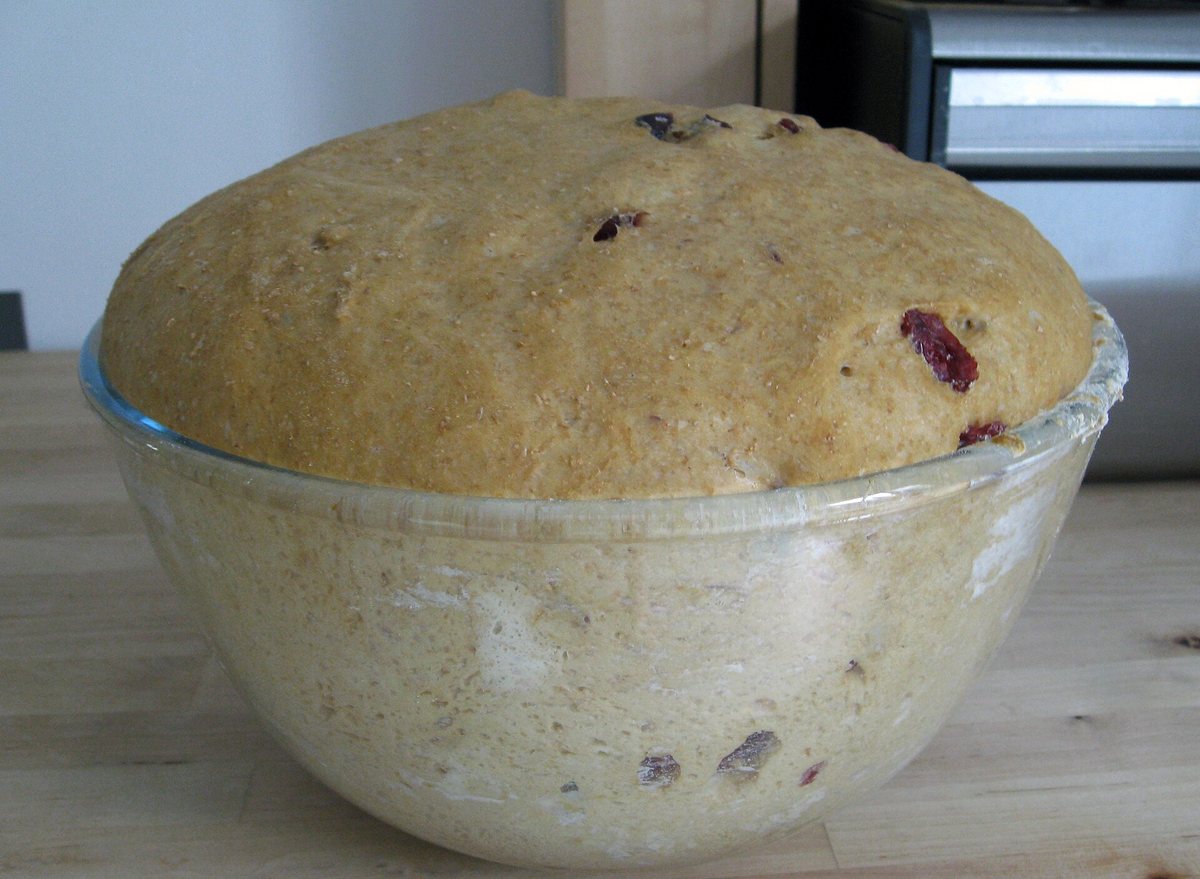
In fact, bread rises the most before it is baked. During the time the dough is left to rest, called "proofing," it slowly puffs up. According to Iowa State University's instructions, leaving it in a warm place for about 45–60 minutes makes the dough about 2 times bigger.
One more rise in the oven
When it goes into the oven, the dough rises sharply once more. This is called "oven spring." According to Utah State University Extension materials, it is a quick rise that happens in about the first 10 minutes in the oven. The heat makes the gas expand, and some of the water in the dough also turns into gas. Eventually a crust forms on the surface, and as the temperature rises the yeast can no longer work, so the rising stops.
The biggest rise happens during proofing, before baking.
Want to know more?
- Yeast is sensitive to temperature. It works actively in lukewarm water, slows down when it is cold, and dies if it gets too hot.
- The crust of bread turns a toasty brown when baked because of a chemical reaction called the "Maillard reaction."
- Salt also slows down the yeast, while sugar feeds the yeast and helps the dough rise faster.

Quick quiz: test yourself
What gas makes bread dough rise?
Show the answer
- Oxygen
- Hydrogen
- Carbon dioxide
Carbon dioxide Yeast eats sugar and gives off carbon dioxide, and the gluten network traps the gas like tiny balloons.
Yeast eats sugar and gives off carbon dioxide, and the gluten network traps the gas like tiny balloons.
Next quiz ›Sources
- Why does bread expand in the oven?Ask Dr. Universe, Washington State University
- Yeast Bread Baking – A Kitchen Science 'Drama'Iowa State University Extension and Outreach
- Yeast Breads Plain and Fancy (FN 283)Utah State University Cooperative Extension
This article was written after checking the sources above as of 2026-10-03. Explanations may change as research progresses. Photo credits are shown below each photo.