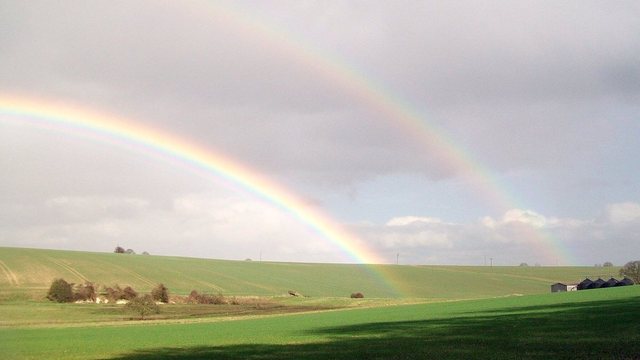
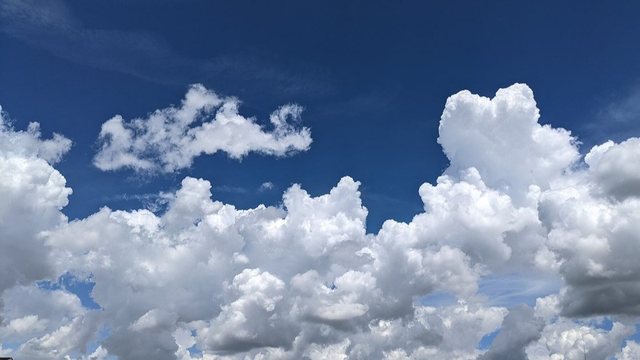
If the sky is blue, why are sunsets red?

 Both can be explained by the very same mechanism.
The sky is blue because nitrogen and oxygen molecules in the air scatter the short-wavelength blue part of sunlight especially strongly. In the evening the sun is low, so its light travels a long distance through the air. Most of the blue light is scattered away along the way, and much of what reaches our eyes is the remaining red and orange light.

Sunlight is a mix of many colors
Sunlight looks whitish, but it is really a mix of many colors, like a rainbow. Light travels like a wave, and each color has a different wave length (wavelength). Red light has a long wavelength, while blue and violet light have short wavelengths.
Air molecules scatter blue light
When sunlight enters the atmosphere, it hits tiny molecules such as nitrogen and oxygen and scatters in every direction. This is called Rayleigh scattering. Because the molecules are much smaller than the wavelength of light, the shorter the wavelength, the more strongly the light is scattered. The scattered blue light reaches our eyes from every part of the sky, so the whole sky looks blue.
Why isn't the sky violet?
In that case, you might expect a violet sky, since violet has an even shorter wavelength than blue. In fact, violet light does scatter more strongly than blue. But sunlight contains only a little violet light to begin with, and human eyes are more sensitive to blue than to violet. That is why the sky looks blue to us, not violet.

Why sunsets are red
In the morning and evening, the sun is low, and its light passes through a much thicker layer of air than at midday. Along that long path, blue light is scattered again and again, so the light that comes straight through is mostly long-wavelength red, orange, and yellow. Dust and tiny particles in the air also scatter blue light, which can make the sky look even redder.
Want to know more?
- In space or on the Moon, where there is almost no air, there are no molecules to scatter light, so the sky looks black even in the daytime.
- The sky near the horizon looks whitish because light passes through a lot of air and scatters many times, mixing the colors together.
- Photos from NASA's rovers have confirmed that on Mars, the daytime sky is orange or reddish, and at sunset the area around the sun turns a bluish gray.

Quick quiz: test yourself
Why do sunsets look red?
Show the answer
- The Sun gives off more red light
- Blue light gets scattered away
- Clouds reflect a red color
Blue light gets scattered away In the evening, sunlight travels a long way through the air, so most blue light is scattered away and mostly red and orange light reaches our eyes.
In the evening, sunlight travels a long way through the air, so most blue light is scattered away and mostly red and orange light reaches our eyes.
Next quiz ›Sources
- Why Is the Sky Blue?NASA Space Place
- Why the sky is blue and sunsets redMet Office
- Why is the sky blue?Hong Kong Observatory
This article was written after checking the sources above as of 2026-10-03. Explanations may change as research progresses. Photo credits are shown below each photo.