How does soy milk turn into tofu?

 First, let me give you the answer in 30 seconds.
Tofu is made by adding a "coagulant" to soy milk, which makes the soybean proteins set. Coagulants include salt-type ones, such as magnesium chloride (the main part of nigari) and calcium sulfate, and glucono delta-lactone, which slowly turns into an acid. Firm (momen) tofu and silken (kinugoshi) tofu are made differently after the soy milk sets.
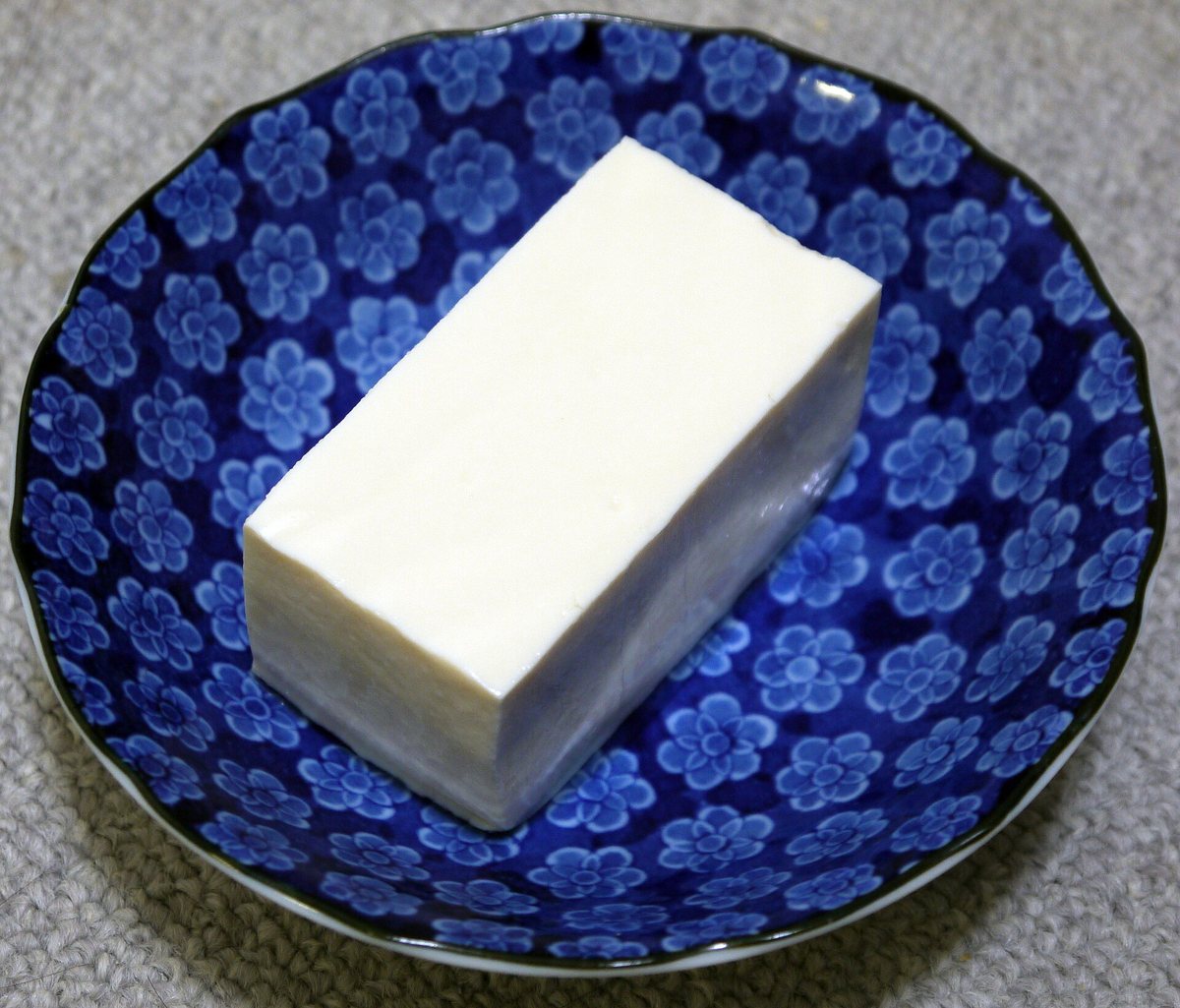
First, make soy milk
Making tofu starts with making soy milk. Soybeans are washed and soaked in water for a set time, then ground while water is added. This is heated, and the liquid that is strained off is soy milk. It is usually heated at 100℃ for about 5 minutes. Heat changes the nature of soybean proteins, so the way the soy milk is heated also changes the texture of the tofu.
Setting with salts like nigari
The ingredient that sets soy milk is called a coagulant. The one used since long ago is magnesium chloride, known as nigari. Today calcium sulfate and calcium chloride are also used. Adding them has been reported to tip the soy milk slightly toward acidic, but parts of exactly how it sets are still not clear.

A coagulant that slowly turns into acid
Another coagulant is glucono delta-lactone. In soy milk, it slowly turns into an acid called gluconic acid, tipping the soy milk toward acidic and setting it. It is easy to handle and makes smooth, fine-textured tofu, so it is often used for silken tofu and for "filled" tofu (jūten tofu), which is set inside its container.
Firm, silken, and filled tofu
Firm tofu is made by breaking up the set curds, putting them into a cloth-lined mold box, and pressing them with a weight to drain the water. Silken tofu is not squeezed or drained, so thick soy milk is set just as it is. Filled tofu is made by packing chilled soy milk and coagulant into a container together, and then heating it to set.
Steps based on material from Japan's Food Safety Commission (one example).
Want to know more?
- The amount of coagulant changes how firm tofu is. In an experiment with black soybean tofu, magnesium chloride, the main part of nigari, made the firmest tofu at 0.40–0.45%; adding more did not always make it firmer.
- One study found that heating soy milk in two stages, at 75℃ for 10 minutes and then at 100℃ for 5 minutes, makes tofu with a finer texture that lets out less water.
- Both firm and silken tofu are soaked in water after they set, to remove extra coagulant and bitter-tasting substances.

Quick quiz: test yourself
What is added to soy milk to turn it into tofu?
Show the answer
- Wheat flour
- A coagulant, such as nigari
- Gelatin
A coagulant, such as nigari Tofu is made by adding a coagulant, such as magnesium chloride (the main part of nigari, a salty liquid left from seawater), to firm up the soy protein.
Tofu is made by adding a coagulant, such as magnesium chloride (the main part of nigari, a salty liquid left from seawater), to firm up the soy protein.
Next quiz ›Sources
- 「無菌充填豆腐」を常温保存した場合のリスク評価を行いました(食品安全 第54号, 2018年3月)内閣府 食品安全委員会 (in Japanese)
- 豆腐中のグルコノデルタラクトンの分析(東京健安研セ年報 57, 2006)東京都健康安全研究センター (in Japanese)
- 凝固剤濃度を変えて調製した黒ダイズ品種の豆腐の色調と破断応力(九州沖縄農研報告 63, 2015)農研機構 九州沖縄農業研究センター (in Japanese)
- 豆乳を二段階で加熱すると豆腐が変わる農研機構 食品総合研究所 (in Japanese)
This article was written after checking the sources above as of 2026-10-03. Explanations may change as research progresses. Photo credits are shown below each photo.