Why does whipped cream get fluffy?

 There is a surprising hero holding up the bubbles. Let me tell you in 30 seconds.
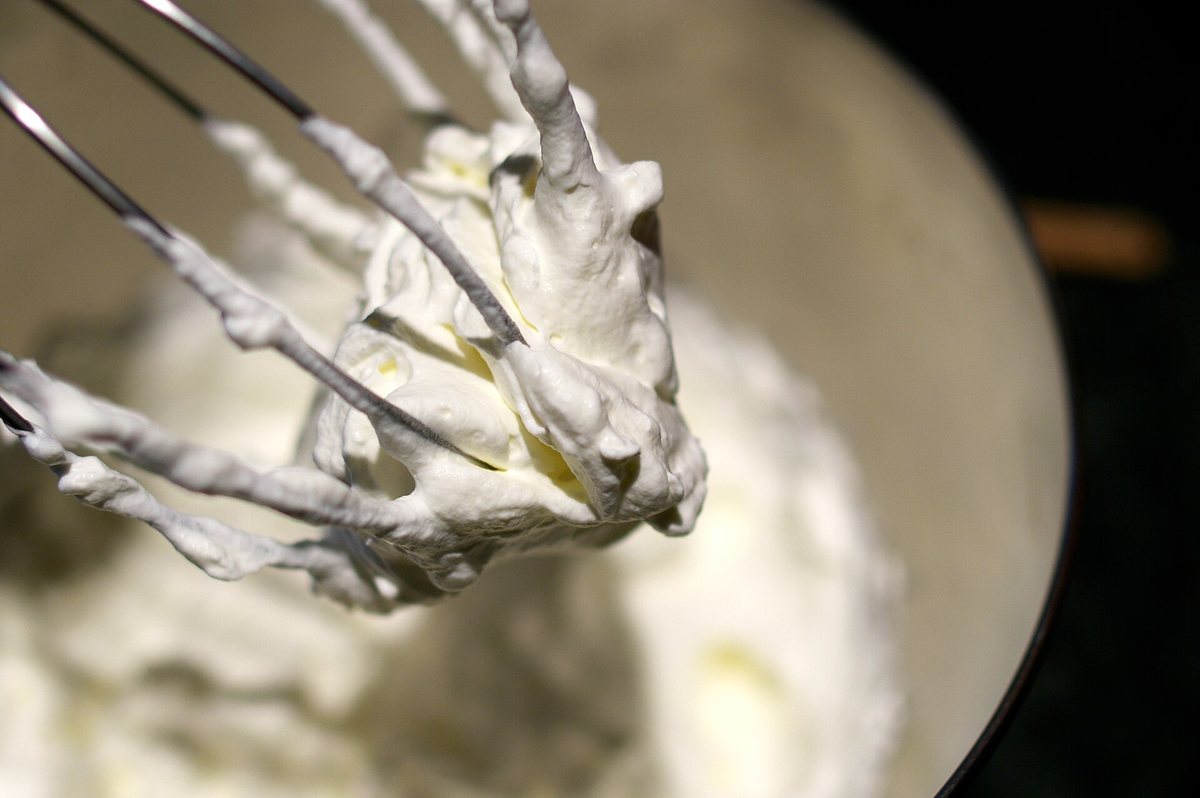
When you whip cream, the air that gets mixed in turns into tiny bubbles, and proteins and tiny drops of fat (fat globules) gather on the bubble surfaces. As you keep whipping, the fat globules partly stick to each other and form a mesh around the bubbles. This mesh holds the bubbles up, so they don't collapse and the cream keeps its fluffy shape.
Cream is a liquid with floating fat drops
Whipping cream is a liquid with lots of tiny drops of fat, called fat globules, scattered through water, and it is fairly high in fat, at 30–40%. Research says cream needs at least 30% fat to make a firm foam. When you whip it, cream that was made of two things, water and fat, becomes something made of three, with air added.
Proteins and fat globules on the bubbles
When you start whipping, large air bubbles get mixed in first, and proteins in the liquid quickly attach to the bubble surfaces. As you keep whipping, the large bubbles break into smaller ones, and then fat globules take the place of some of the proteins on the bubble surfaces.
A mesh of fat globules holds up the bubbles
As you whip even more, the fat globules don't fully merge, but partly stick together. This is called "partial coalescence," and it makes the cream stiffer. In the end, a mesh of linked fat globules surrounds and supports the bubbles, keeping them from collapsing.

Hardened fat and cold temperatures
For this to happen, it is important that some of the fat inside the fat globules has hardened into crystals. Research says that at least 40% of the fat needs to be crystallized for partial coalescence to go forward and make the foam firm. In one study, because fat globules break apart easily above 10℃, the researchers whipped cream chilled to 5℃ in a refrigerator while keeping it at 4.6–6.3℃.
If you whip too much
But be careful not to over-whip. If you whip too much, the linked fat globules break down into large clumps, and the cream loses its ability to hold its shape.
Want to know more?
- Some whipping cream is made by spinning milk in a centrifuge, and some is made by mixing milk fat with things like skim milk powder and water.
- A study comparing creams with different fat contents confirmed that the higher the fat content, the firmer the layer of fat globules around the bubbles, and the more stable the foam tends to be.

Quick quiz: test yourself
What holds up the bubbles in whipped cream?
Show the answer
- Sugar crystals
- The water in milk
- A network of fat globules
A network of fat globules Whipping gathers fat globules on the bubble surfaces. They partly stick together into a network around the bubbles, keeping them from collapsing.
Whipping gathers fat globules on the bubble surfaces. They partly stick together into a network around the bubbles, keeping them from collapsing.
Next quiz ›Sources
- Effects of monoacylglycerols with different saturation degrees on physical and whipping properties of milk fat-based whipping creamsFood Science and Biotechnology(PubMed Central 掲載)
- Microstructure and chemorheological behavior of whipped cream as affected by rice bran protein additionFood Science & Nutrition(PubMed Central 掲載)
- Air bubble dispersion imaging in whipping cream with specified fat contents by fuzzy phase classification implemented in electrical impedance tomographyScientific Reports(PubMed Central 掲載)
This article was written after checking the sources above as of 2026-10-03. Explanations may change as research progresses. Photo credits are shown below each photo.