Why do water drops form on the outside of a cold glass?

 The answer lies somewhere other than inside the glass.
The drops on the outside of a glass are water vapor from the surrounding air that has been cooled on the cold glass surface and turned back into water. The drink inside is not seeping out through the glass. You often see this on humid days.
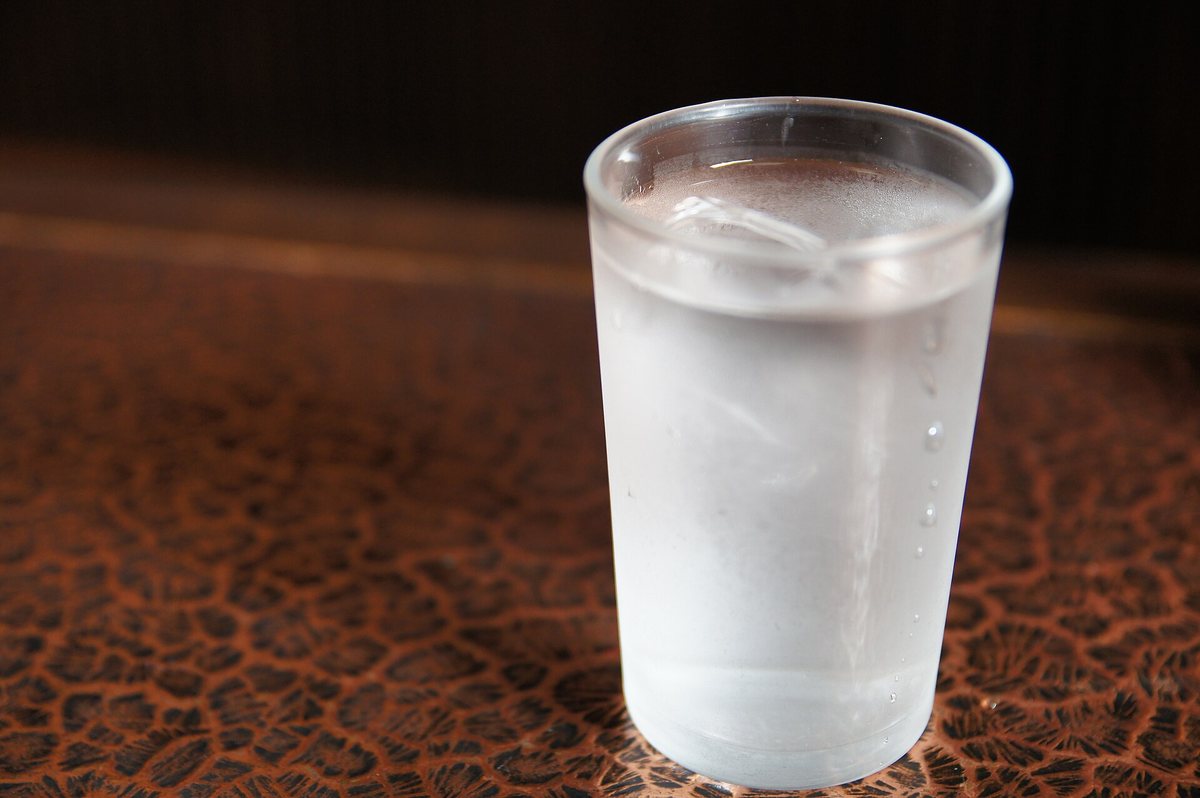
The drops are water vapor from the air
Air always contains invisible water vapor (water in the form of a gas). The drops that form on the outside of a cold glass are this water vapor, cooled down and turned back into liquid water. When water vapor changes from a gas into liquid water, it is called condensation.
The glass cools the air
When you pour in a cold drink, the glass gets cold, and the air right next to the glass gets cold too. As air cools, at a certain temperature its water vapor starts turning into drops. This temperature is called the dew point. When the glass surface is colder than the dew point, nearby water vapor turns into drops and collects on the surface.
The water inside isn't seeping out
Quite a few people think that "the water inside is seeping out through tiny holes in the glass." But glass does not let water through, so the water inside does not come out. The drops form on the cold outer surface of the glass. The water comes not from inside the glass but from the air around it.

The same thing happens all around us
You often see the outside of a cold drink glass get wet on humid days. Coasters are used so that drops falling from the glass don't wet the table. Windows getting wet when warm, humid room air touches cold window glass, and dew forming on cool grass on clear nights, both work the same way.
Want to know more?
- When someone wearing glasses walks from a cool air-conditioned room out into humid air, their lenses can fog up. This is also condensation: water vapor turning into tiny drops on the cold lens surface.
- The temperature at which water vapor starts turning into drops (the dew point) is not always the same. It changes with how humid the air is and with air pressure.
- Fog can also form when humid air touches cold ground or other surfaces, cools to the dew point, and its water vapor turns into tiny drops.

Quick quiz: test yourself
What are the drops on the outside of a cold glass?
Show the answer
- Water vapor from the air
- The drink seeping through
- Melted frost from the fridge
Water vapor from the air Water vapor in the surrounding air is cooled on the cold glass and turns back into water.
Water vapor in the surrounding air is cooled on the cold glass and turns back into water.
Next quiz ›Sources
- Condensation and the Water CycleU.S. Geological Survey (USGS) Water Science School
- Condensation Concept CartoonThe Inquiry Project (TERC and Tufts University)
- DewMet Office
This article was written after checking the sources above as of 2026-10-03. Explanations may change as research progresses. Photo credits are shown below each photo.