Why does snow stay on mountains even in summer?

 The answer is not only about temperature.
High mountains are much cooler than flat land even in summer, and in places where wind and avalanches piled snow tens of meters deep during winter, the snow does not fully melt over the summer. Clean white snow also reflects much of the sunlight, which helps it melt more slowly. Still, it is not true that summer summits are always close to freezing.
The higher, the cooler
In general, the higher you go, the lower the temperature. According to the Japan Meteorological Agency's normal values, the average temperature at the summit of Mt. Fuji (3,776 m above sea level) is about 5℃ in July and about 6℃ in August, and the average for the whole year is about minus 6℃. Even in midsummer, it is much cooler than the flat land at the foot of the mountain.
Summer summits aren't always freezing
However, summer summits are not always close to freezing. Even at the top of Mt. Fuji, Japan's highest mountain, the average temperature in August is above 0℃. Whether snow lasts until summer depends not only on the temperature but also on how much snow piled up in winter.
Normal values from the Japan Meteorological Agency.

Wind and avalanches gather snow
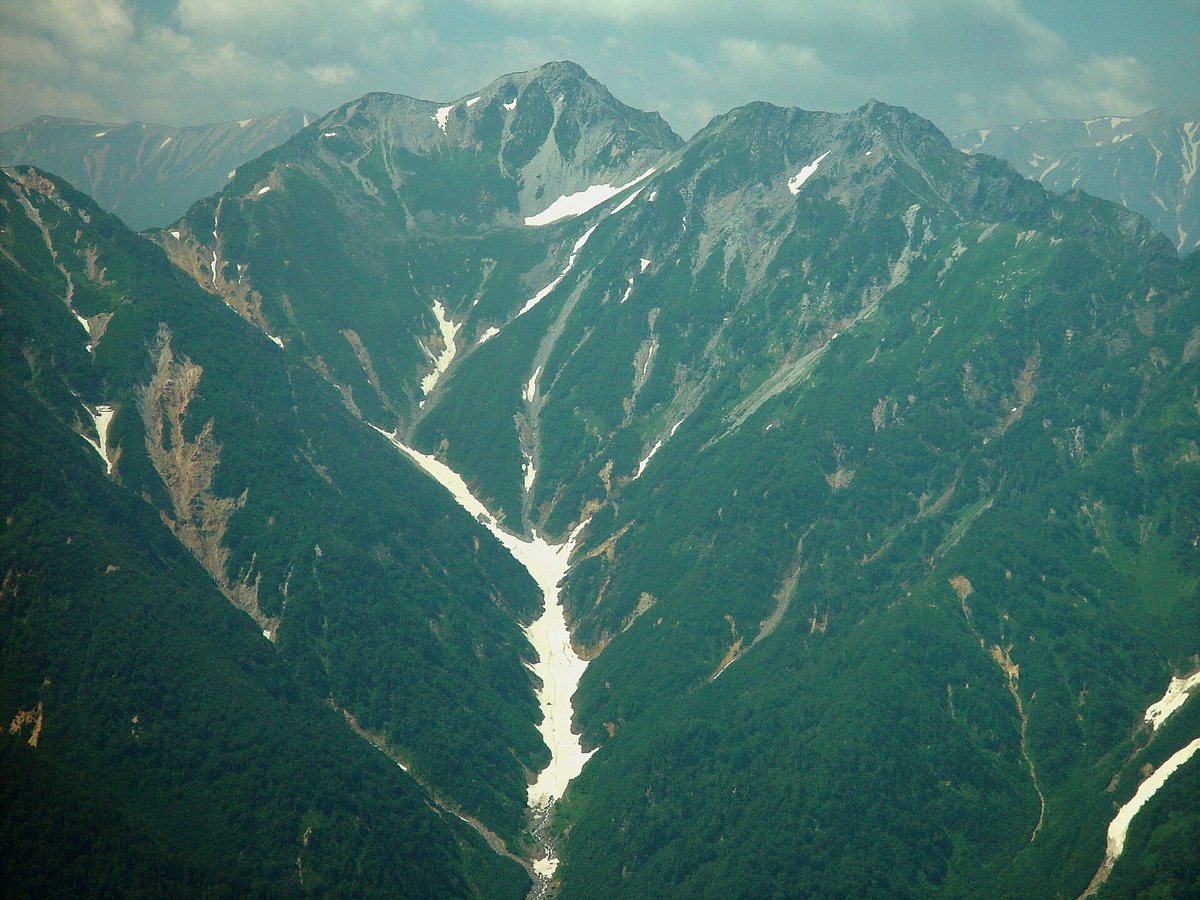
On mountains on the Sea of Japan side, such as the Northern Alps, the northwest seasonal winds of winter carry large amounts of snow, and drifts build up on the downwind side of the ridges. When avalanches from the slopes gather there too, the snow in the valleys can become more than 20 m deep. At a snowy gorge (valley snow that lasts until summer) called "Hamaguri-yuki," between Mt. Tateyama and Mt. Tsurugi, surveys from 1967–2006 found that the snow was about 19 m deep on average in early June, and that about 3.5 m on average was still left in early October, at the end of the melting season.
From survey reports of the Tateyama Caldera Sabo Museum.
White snow reflects light
The whiteness of snow matters, too. Clean, freshly fallen snow reflects 80–90% of sunlight, so it does not warm up easily. But when it gets dirty with dust and the like, it reflects less light and melts more easily. Coolness, the amount of snow, and the whiteness of the snow all work together, and that is how snow stays on mountains in summer.
Want to know more?
- Ground that is not covered by snow is said to absorb about 4–6 times more of the sun's energy than when snow is on it.
- The name "Hamaguri-yuki" comes from the shape of the snowy gorge left in autumn, which looks like a hamaguri, a kind of clam.
- The normal value (for reference) of the deepest snow at the summit of Mt. Fuji is about 2 m in April and 0 cm in August. The snow at the top of Mt. Fuji almost disappears in summer.

Quick quiz: test yourself
Why does snow stay on mountains in summer?
Show the answer
- Summits are always below freezing
- Summer mountains get no sunlight
- It's cool and the snow is very deep
It's cool and the snow is very deep High mountains stay cool, and snow piled tens of meters deep by wind and avalanches does not fully melt. Even on top of Mount Fuji, the August average is above 0℃.
High mountains stay cool, and snow piled tens of meters deep by wind and avalanches does not fully melt. Even on top of Mount Fuji, the August average is above 0℃.
Next quiz ›Sources
- 過去の気象データ検索 富士山(静岡県)平年値(年・月ごとの値)気象庁 (in Japanese)
- 北アルプス「はまぐり雪雪渓」の調査報告 -1967~2006年の年々変動と涵養過程について-(立山カルデラ研究紀要第8号)立山カルデラ砂防博物館 (in Japanese)
- 飛騨山脈北部における“なだれ涵養型”氷河・雪渓の質量収支(日本地理学会発表要旨集)日本地理学会(J-STAGE) (in Japanese)
- Why Snow MattersNational Snow and Ice Data Center (NSIDC)
This article was written after checking the sources above as of 2026-10-03. Explanations may change as research progresses. Photo credits are shown below each photo.